
A solid induction into the workplace is your first, best chance to get new workers up to speed. It’s where you make sure they understand the site's rules and risks from day one. Get it wrong, and you're setting yourself up for confusion, project delays, and good people walking off the job. A good induction isn't just a formality; it gives new starters the practical info they need to work safely and productively.
The High Cost of a Bad First Impression
Let’s be blunt. A sloppy or rushed induction process isn't just an admin headache; it's a massive business risk. In high-stakes industries like construction and manufacturing, the consequences hit hard and fast. You’re left dealing with project delays, wasted materials, and a frustrating cycle of rehiring that just drains time and money.
Worse than that, it sends a clear message to new hires: their integration isn't a priority. That first impression sticks and colors their entire view of the company.
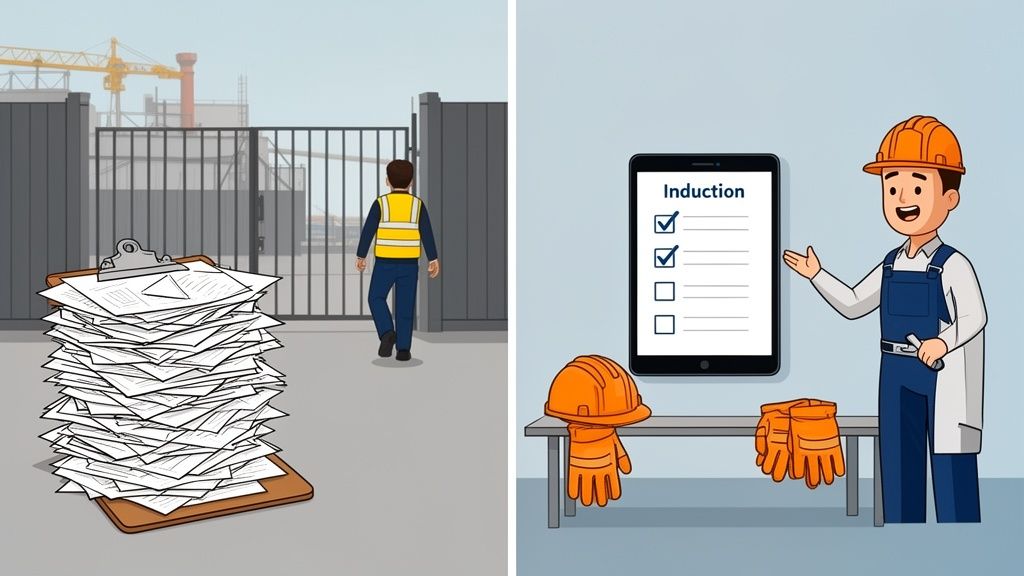
The Real Impact of Poor Inductions
When a new worker shows up unprepared, the problems begin immediately. They don’t know the specific site rules, where to find first aid, or even who their supervisor is. This creates an instant drag on productivity, as other team members have to stop what they're doing to answer basic questions that should've been covered from the get-go.
This initial confusion is a huge reason why so many new employees don't stick around. The numbers are pretty stark: nearly 30% of employees leave their jobs within the first 90 days. This is a particularly sore point in Australia, where a staggering 43% of employers lose new staff within the first month. Many of those workers point directly to a bad onboarding experience, like trying to navigate unfamiliar sites while buried in paperwork, as the reason they left. You can dig deeper into these onboarding statistics and their impact.
A strong induction isn't just about ticking a compliance box; it's fundamental to your operational stability. It prevents the constant disruption of high early turnover and makes sure every person on site has the baseline knowledge to do their job right.
From Paperwork to Practicality
The old-school approach of dumping a thick folder of forms on a new starter’s lap is completely broken. It buries critical safety information in dense text and creates a bureaucratic, negative first impression. A worker’s first few hours shouldn't be about filling out paperwork; they should be about understanding the actual work environment.
A modern, practical induction zeroes in on what actually matters:
- Site-Specific Rules: Not generic corporate policies, but the actual rules for that specific construction site or factory floor.
- Key Hazards: Clearly identifying the main risks they’ll face in their work area.
- Emergency Plans: Showing them exactly where muster points, fire extinguishers, and first aid kits are.
- Team Introductions: Connecting them with the people they'll be working alongside every day.
By shifting the focus from administrative fluff to practical, on-the-ground knowledge, you create a far more effective and welcoming experience. This isn't just about procedure; it’s about building a foundation for a competent, confident worker who is ready to contribute from day one.
The Pre-Arrival Checklist for a Smooth Start
A new worker’s first day shouldn't be a frantic scramble to find the right paperwork, the correct PPE, or a working login. A truly successful induction into the workplace actually kicks off long before they even set foot on site.
Getting all the admin and logistical tasks sorted out beforehand means Day One is all about the job and the work environment, not chasing signatures.
This pre-arrival phase is your chance to show you're organised and that you respect their time. It sets a professional tone from the get-go and ensures they arrive feeling prepared and valued, rather than like an afterthought.
Sort Out the Paperwork Digitally
The biggest time-waster on day one? Almost always, it's paperwork. Handing a new employee a thick stack of forms to fill out is an inefficient and pretty frustrating start to their first day.
Instead, get all the essential documents sent out digitally as soon as they’ve accepted the role. This simple step gives them time to review and complete everything without feeling rushed. It also means you get critical information back much faster, which lets you finalize their setup without any last-minute panic.
Key documents to send in advance include:
- Tax File Number Declaration: Get this sorted so their first payslip is correct from the start.
- Superannuation Standard Choice Form: This ensures their super is allocated properly from day one.
- Bank Account Details: Absolutely essential for getting payroll set up.
- Emergency Contact Information: This is a critical piece of information you need on file before they start any work.
Using a digital system to manage this is far more practical than emailing PDFs back and forth. Platforms like Safety Space create a secure portal where new hires can complete forms, which automatically creates a clean, organised, and fully auditable record for you.
Prepare Their Gear and Access
Nothing says "we weren't ready for you" quite like a last-minute hunt for a hard hat or a pair of boots. Preparing all the necessary equipment and access credentials is a simple but powerful way to make a new starter feel welcome and ready to contribute.
Before they arrive, make sure everything is organised and waiting for them. A crucial part of this is having a comprehensive onboarding checklist for new employees to ensure all your administrative and logistical ducks are in a row.
Your pre-arrival prep should cover:
- Personal Protective Equipment (PPE): Have their correctly sized hard hat, safety glasses, high-vis clothing, gloves, and boots ready to go.
- System Logins and IT Access: Create their email account, software logins, and any other system credentials they'll need. Send them the details so they can get logged in straight away.
- Site Access: Organise their physical keycard, fob, or any codes needed to access the site and specific work areas.
Having their gear ready shows you’ve planned for their arrival. It communicates that they are an expected and essential part of the team, not just another number.
Assign Pre-Start Online Modules
Many core parts of an induction can actually be completed before the first day even begins. Assigning brief, focused online training modules lets new starters learn about fundamental site rules and procedures at their own pace.
You can explore our detailed WHS induction checklist to see exactly which elements can be covered effectively online before they arrive.
For example, short videos or interactive modules on topics like general site rules, the location of amenities, or basic emergency protocols are perfect for pre-arrival training. This front-loads the essential information, freeing up valuable time on their first day for more practical, hands-on orientation with their supervisor and team. Better yet, this approach produces an immediate digital record confirming they've completed and understood the material.
Your Day One Induction Agenda
The first day on a new site really sets the tone. A well-planned agenda for their induction into workplace procedures shows you're organised and that you take their role, and their safety, seriously. This isn't about a fluffy welcome speech; it’s about giving them the practical, site-specific information they need to get started safely and without wasting time.
The goal is to bridge the gap between paperwork and the real world. Your agenda should be a hands-on guide to their new environment, focusing on the immediate surroundings, rules, and people they'll be dealing with every day. A clear structure stops people from feeling overwhelmed and helps them remember the stuff that actually matters.
A smooth Day One actually starts before Day One. The best practice is to get all the admin out of the way before they even step foot on site.
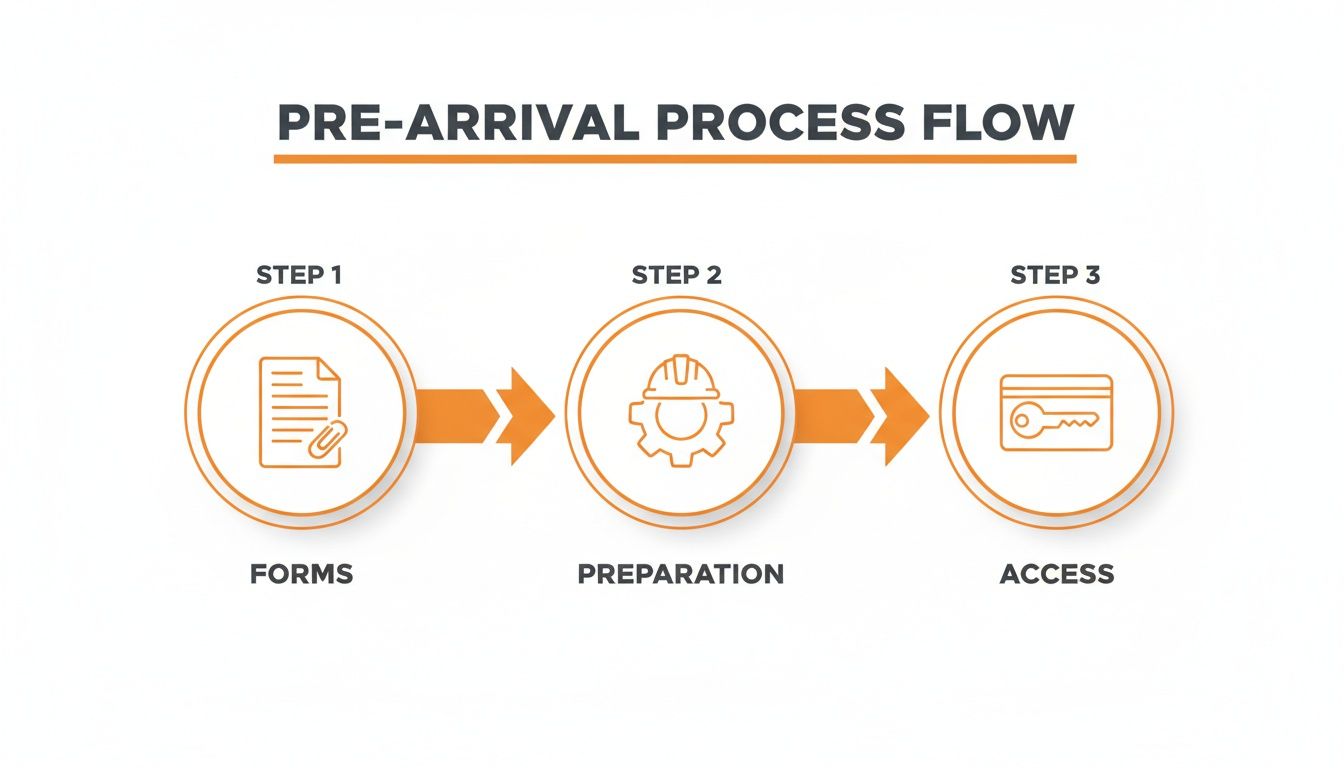
By handling forms, sorting out their gear, and arranging access credentials beforehand, you can dedicate their first day entirely to practical, on-the-ground orientation.
The Site Tour That Actually Matters
First up on the agenda has to be a physical walk-through of the site. I don’t mean a casual wander around; this is a guided tour with specific objectives. You're building their mental map of the workplace, pointing out all the locations critical to their safety and daily routine.
Put yourself in their shoes. What do they absolutely need to know in their first hour? Where’s the first aid kit? Who’s the supervisor?
During this tour, you need to physically point out and explain the purpose of:
- Emergency Muster Points: Don't just mention where it is. Walk them right to the spot so there's no confusion in a real emergency.
- First Aid Stations: Show them all the first aid kits, eye wash stations, and defibrillators. Make sure they know who the first aiders are on their shift.
- Fire Extinguishers and Alarms: Point out the locations of extinguishers relevant to their work area and explain what the different alarms sound like.
- Key Facilities: This covers the basics like break rooms, toilets, and drinking water, but also the site office and their specific work zone.
Covering the Critical Rules and Hazards
Once they have the lay of the land, it’s time to cover the non-negotiables: the site rules and the most significant hazards they'll face. This part of the induction needs to be direct and crystal clear, without any vague corporate-speak. You’re talking about the specific risks on this factory floor or that construction site.
This isn’t about reading out a laundry list of every possible danger. Focus on the big ticket items, the things that could cause serious harm. On a building site, that means talking about working at heights, vehicle movements, and live power. In a manufacturing plant, it might be machinery guarding, hazardous chemicals, or lockout/tagout procedures.
Your goal is to give them a practical understanding of the top three to five risks they'll encounter every single day. A focused approach like this is far more effective than drowning them in a long, generic list of potential problems.
A solid way to manage this conversation is with a checklist. You can find a great starting point by looking at a comprehensive site induction template that covers these core topics in detail.
Practical PPE Demonstration and Fit
Just handing someone a hard hat and a pair of safety glasses is not good enough. Your induction agenda must include a practical demonstration of how to correctly use, inspect, and look after their Personal Protective Equipment (PPE). This is where you physically show them how it all works.
For instance, show them how to properly adjust the harness on a hard hat for a secure fit. Demonstrate how to check safety glasses for scratches that could mess with their vision, or how to properly insert earplugs. If they need respirators, this is the time for a proper fit test, not just a quick handover from a box.
This hands-on approach does two things:
- Ensures Correct Use: It confirms they know how to wear the equipment effectively, which is the only way it can actually protect them.
- Reinforces Responsibility: It shows them that the company takes PPE seriously and that they’re expected to inspect and care for their own gear.
Team Introductions and Communication Lines
A new worker's induction isn't really complete until they’ve met their immediate team and understand the chain of command. The final part of your Day One agenda should be all about these human connections.
Take a few minutes to personally introduce them to their direct supervisor and the people they'll be working alongside. It’s a simple step, but it helps them feel like part of the team from the get-go and gives them a clear person to go to with questions.
It's just as important to explain the communication channels. How do they report a hazard or an incident? Who do they talk to about their daily tasks or if they need more materials? Clarifying this prevents confusion and makes sure information gets to the right people, fast. Setting up these clear lines of communication is a cornerstone of a successful induction into any workplace.
Juggling Inductions for Contractors and Multiple Sites
Handling inductions for contractors or across several different locations throws a few spanners in the works. You can’t just roll out the same one-size-fits-all program. Contractors need specific, sharp information delivered fast, and keeping your induction standards consistent from one site to another is non-negotiable.
The real trick is getting the right information to the right people. You don't want to bury a short-term contractor in details they don't need, but you absolutely can't afford for critical site-specific hazards or rules to be missed. It’s a constant balancing act between thoroughness and efficiency.
What Makes Contractor Inductions Different?
Unlike your permanent team, contractors are usually on-site for a specific, often short-term, task. Their induction needs to be laser-focused on the immediate risks and procedures that matter to their job. Forget the long-winded company history or team-building sessions; they just aren’t practical.
Your contractor induction absolutely must prioritize:
- Verifying Qualifications: Before they set foot on site, you need a bulletproof process to check their licences, tickets, and certifications are current and valid. A digital system beats chasing paper copies every single time.
- Site-Specific Hazard Briefings: They don’t need the full rundown of every risk across the entire project. But they must have a crystal-clear understanding of the specific hazards in their immediate work area.
- Permit-to-Work Systems: This is huge. A massive part of managing contractors safely is ensuring they get, and follow, your permit systems for high-risk jobs like hot work, confined space entry, or working at heights.
- Emergency Procedures: There’s no room for error here. They must know your site's specific emergency signals, muster points, and who to contact the second something goes wrong.
The end goal is simple: confirm they can do their job safely within the context of your work environment. It's less about integrating them into the company culture and all about aligning on procedures and operations. To see how a dedicated platform can lock this down, have a look at our guide on building an effective contractor management system.
Keeping Things Consistent Across Multiple Sites
When your business is spread across several locations, maintaining a consistent standard for inductions becomes a real headache. The induction process in Perth can't be worlds apart from the one in Adelaide. Sure, the site-specific details will change, but the core safety information and the standard of delivery have to be the same.
Inconsistent inductions create blind spots and risk. If one site has a rigorous process and another is a bit more relaxed, you have no reliable safety baseline across your entire workforce. This is where centralizing your induction process through a digital platform gives you a massive advantage.
A single, centrally managed system ensures every worker, whether they're a permanent employee in a city factory or a short-term contractor on a remote site, receives the same fundamental safety information. This creates a clear, auditable standard across the whole organisation.
This is especially critical in Australia. The sheer geographic spread of operations here can make old-school, in-person onboarding a logistical nightmare, particularly for companies with teams scattered across different states. For construction firms with projects in both Western Australia and southern Australia, traditional inductions are incredibly time-consuming and expensive. A digital approach tackles these issues head-on, simplifying coordination and slashing both time and cost. You can read more about the trend towards online inductions in Australia.
A Practical Approach to Multi-Site Management
So, how do you actually make this work on the ground? The key is to structure your induction content in layers, starting broad and getting more specific.
Here’s a structure that works:
- Company-Wide Core Module: This is your foundation. It covers universal company policies, overarching safety principles, and general conduct everyone needs to know. Every single person, regardless of role or location, completes this.
- Site-Specific Modules: Once the core module is ticked off, workers get assigned a module for the specific site they’ll be on. This is where you cover local hazards, emergency plans, key on-site contacts, and any unique rules for that location.
- Role-Specific Information: The final layer drills down into details relevant to their actual job. Think specific permit-to-work systems they’ll be using or particular machinery they’ll operate.
This layered approach means you’re not constantly reinventing the wheel. You build the core content once, then add the smaller, site-specific modules as needed. Using a platform like Safety Space lets you easily assign these modules and, crucially, track their completion in real-time. You get a clear, immediate picture of who is inducted for which site, all from a single dashboard, without ever needing a spreadsheet or paper form again.
Using Digital Tools to Automate and Record Inductions
Let’s be honest, relying on paper forms and manual checklists for your induction into workplace processes is a massive administrative headache. It’s not just the unnecessary work; it’s the risk of lost documents and the sheer pain of auditing that makes it unsustainable.
Moving to a digital system isn't just about getting with the times. It's a practical move to claw back time and build a compliance trail you can actually rely on.
The real win here is simple: you swap out stacks of paper for an organised, instantly searchable digital record. This frees up your site managers and supervisors from chasing signatures, allowing them to focus on what truly matters: overseeing work and keeping people safe.
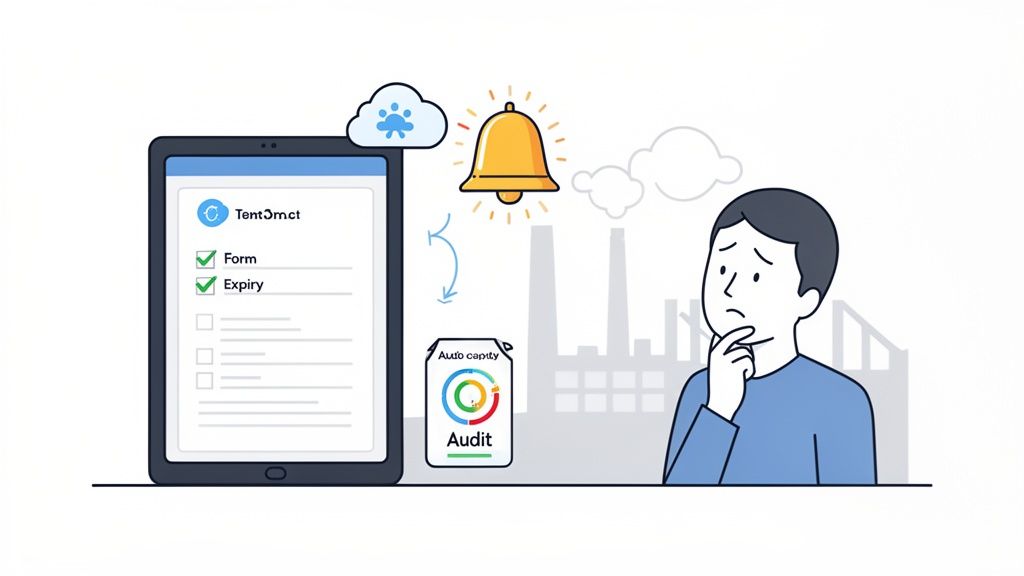
From Paper Chase to Digital Certainty
Think about the old way of doing things. A new worker fills out a paper form, it gets shoved in a filing cabinet, and you just hope you can find it when an auditor shows up. More often than not, it's incomplete, misplaced, or stuck in a site office miles away, making it useless for any real oversight.
Digital induction tools completely flip this script.
The moment a worker finishes their induction on a tablet or computer, the record is locked in. It’s time-stamped, securely stored, and ready to be pulled up at a moment's notice.
This gives you some immediate, practical advantages:
- No More Lost Forms: Every single record is saved in the cloud. The risk of a crucial document vanishing is gone.
- Instant Confirmation: You can see exactly who is inducted for any site, in real-time, without digging through a single file.
- A Clean Audit Trail: When it's time for a compliance audit, you can generate complete, organised records in seconds, not days.
The second an induction is done digitally, you have a permanent, verifiable record. This isn't just about making life easier; it's about building a bulletproof compliance system that stands up to scrutiny.
Let the System Handle the Admin
One of the biggest game-changers with a proper health and safety platform is automation. The system can take over the repetitive, low-value tasks that eat up a manager's day, making the whole induction process faster and far less open to human error.
Imagine a system that does the nagging for you. For example, when a contractor uploads their public liability insurance, the platform can automatically flag the expiry date. Instead of you tracking it on a spreadsheet, the system pings an automated reminder to both you and the contractor 30 days before it’s due. Simple.
Proactive Compliance, Not Reactive Paperwork
This proactive approach goes way beyond just insurance certificates. It’s incredibly powerful for keeping on top of individual worker qualifications and licences.
Think about these common scenarios on any busy site:
- High-Risk Work Licences: The system tracks expiry dates for tickets like forklift operation or working at heights and sends alerts when renewals are coming up.
- Pre-Start Training: You can assign mandatory online training modules and see who has, and hasn't, completed them. The system can even be set to deny site access until the training is done.
- Site Rule Updates: When you update your site rules, the platform can push the new information out to everyone and require them to digitally sign off, giving you a clear record that they’ve acknowledged the changes.
Using a platform like Safety Space to manage your induction into workplace procedures turns it from a one-off tick-box exercise into a continuous compliance process. You’re no longer just recording an induction; you’re actively managing the ongoing validity of every single person’s qualifications.
That’s a level of oversight almost impossible to achieve with paper and spreadsheets, and it saves your managers a huge amount of time while seriously reducing your compliance risk.
How to Measure the Success of Your Induction Program
An induction is only useful if it actually works. But how do you know if your approach is hitting the mark? The key is to get past vague feelings and look at simple, measurable data that shows you the real impact.
Tracking the right numbers gives you a clear picture of what’s effective and where you need to make improvements. It’s about connecting your induction efforts directly to the business, proving its value in hard terms like operational stability, compliance, and even your bottom line.
Key Metrics to Track
To get a true sense of how your induction program is performing, you need to watch a few core indicators. These aren't just vanity metrics; they provide solid data on how quickly new starters get up to speed and how well that crucial initial training sticks.
- Time-to-Productivity: How long does it really take for a new person to work competently without constant supervision? A shorter time-to-productivity is often a direct result of an induction that gives people the right information, right away.
- Early-Stage Incidents: Keep a close eye on the number of near misses or minor incidents involving employees in their first 30 to 90 days. A high number here is a massive red flag, suggesting that critical hazard information isn't being properly understood or retained. Seeing these incidents drop is a powerful sign of success.
- Training Completion Rates: This one’s straightforward but absolutely vital. If you’re using a digital system, you can see exactly who has completed their required modules. Consistently high completion rates show the process is accessible and that workers are actually engaging with it.
To really get under the hood of what these numbers mean, it's essential to know how to measure training effectiveness in a structured way. This helps you go beyond just "did they finish it?" to "did it actually work?".
Don't Forget Direct Feedback
While hard data is essential, you can’t beat the qualitative feedback from the people who just went through the process. New employees have fresh eyes and can offer incredibly practical insights into what actually worked and what was just confusing.
A simple, anonymous survey sent out a week or two after their start date can give you a goldmine of information.
Ask direct questions like, "What was the most useful part of your induction?" and "Was there anything you felt unprepared for on your first day?" This kind of honest feedback gives you actionable ideas for making the experience better for the next person.
The Clear Link to Employee Retention
Honestly, one of the most powerful indicators of a successful induction is its direct impact on employee retention. High turnover in the first three months is almost always a symptom of a poor initial experience.
When new starters feel supported, well-informed, and properly prepared from day one, they are far more likely to stick around. By tracking your 30 and 90-day retention rates, you can draw a clear line between a strong induction and improved staff loyalty. This isn't just a people problem; it's a financial one. Reducing early turnover saves a huge amount in recruitment and training costs.
Ready to build a reliable, auditable, and effective induction process? Safety Space replaces paperwork with a simple digital platform that automates training, tracks qualifications, and gives you a clear compliance record for every worker, on every site. Find out how it works at https://safetyspace.co.
Ready to Transform Your Safety Management?
Discover how Safety Space can help you implement the strategies discussed in this article.
Explore Safety Space FeaturesRelated Topics
Safety Space Features
Explore all the AI-powered features that make Safety Space the complete workplace safety solution.
Articles & Resources
Explore our complete collection of workplace safety articles, tools, and resources.