Walk onto the site while the work is already moving. A construction safety audit checklist is useless if it only confirms that a folder exists. In the first hour, test records against the people on the sign-in sheet, the plant in the cut, and the task underway.
Do site setup and PPE first. Look at fencing, access, housekeeping and what workers are wearing on the live work front. Then check falls, plant and vehicles before you settle into documents. Subcontractors, permits and safe work method statements come after you have watched the job, not before. A generic form ticked in the site shed will not show a missing barricade.
Sample three to five workers and two work fronts. Ask each person to name one hazard in the current task. Score every check as pass, rectify now, or corrective action. A pass needs the control in place and a worker who can explain it. Rectify now means the supervisor fixes it before you leave that area. A corrective action needs an owner, a due date and a return visit. Use the same questions on every site so results can be compared by crew and subcontractor.
The eight checks below are built for that walk. Paperwork is the starting point. The finding is whatever does not match the ground.
Table of Contents
- 1. Site induction and training competency records
- 2. Plant, equipment and tool inspection
- 3. Working at heights and fall prevention
- 4. Excavation and trenching controls
- 5. Hazardous chemicals register and SDS management
- 6. Electrical safety and temporary power
- 7. Contractor and subcontractor management
- 8. High risk work controls for SWMS, permits to work and JSAs
- 8-Point Construction Safety Audit Checklist Comparison
- Score It, Assign It, Close It Out
1. Site induction and training competency records
The induction register can look complete and still be wrong. Pull the daily sign-in, stand where the work is happening, and match names to faces. Include visitors, labour hire and subcontractors. A worker who arrived at 6:30 am and is already on tools is in scope, even if the supervisor says the paperwork will catch up at smoko.
Under the WHS Act, a PCBU must give workers the information, training, instruction and supervision they need to work safely. That duty is site-specific. A company induction from another project does not cover this site's traffic plan, exclusion zones or emergency point. High risk work licences need the same test. The class on the card has to match the machine, and the expiry date has to be current.
A common miss sits with labour hire. The register shows every name the principal contractor expected. Two hire workers on the slab have no record at all. They were sent to site after the morning upload, and nobody added them.
Practical rule: If the person in front of you is not on the register, the register has failed.
Keep the records by site, not in one company-wide spreadsheet that an auditor cannot filter. Sample three to five people and ask each to name one hazard in the task they are doing. Match the sign-in sheet to the induction register every week, not only on audit day. Check the card the worker carries, including class and expiry, rather than a scanned copy that may be years old.
2. Plant, equipment and tool inspection
Plant fails in the field more often than it fails in the register. Walk with the register in hand and match tag numbers to the excavator, EWP, scaffold, sling or power tool you can touch. Hire gear counts from the hour it arrives, not from the next weekly update.
Vehicle incidents were the leading fatality mechanism in 2023, causing 84 deaths, or 42% of all worker fatalities, and construction workers accounted for 45 deaths, 23% of worker fatalities, in Safe Work Australia's key WHS statistics. Traffic separation, reversing controls, spotters, exclusion zones, licensing and maintenance records belong on the same check as pre-starts. A pre-start that is identical for ten days, while the machine has a cracked window, is not evidence of inspection.
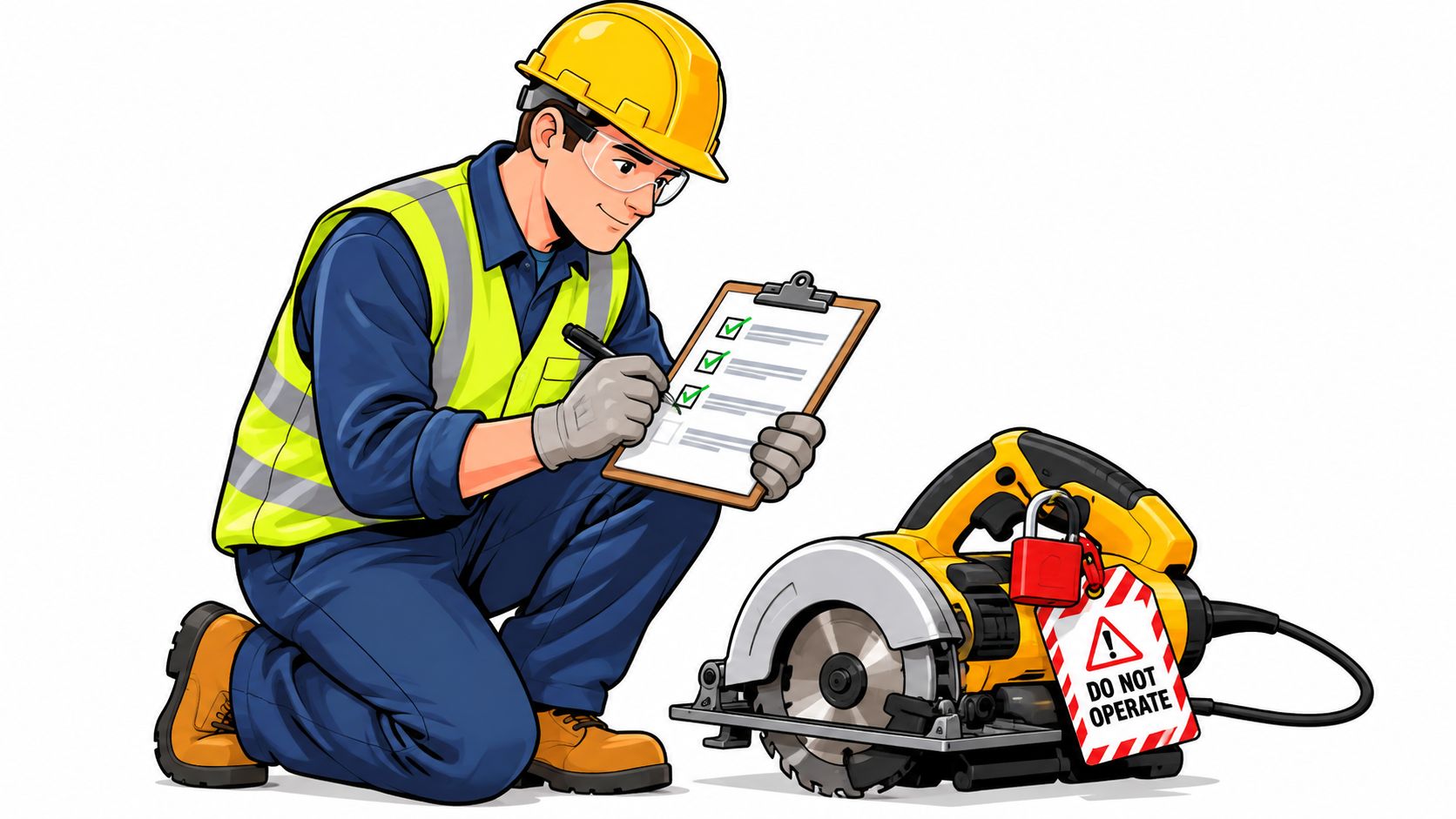
The usual find is a tagged-out tool still in the shed and still in use. Isolation only works if the item cannot be picked up. Lifting gear needs the same physical check. Damaged or unlabelled slings and chains should be out of service, and crews who move loads on trailers can use an ANTS Trailers guide to safe lifting as a practical cross-check on how the load is secured.
- Match tags to items: Walk the site and confirm every tag number exists on a machine or tool.
- Add hire gear the same day: Update the register when the delivery docket is signed, not at the end of the week.
- Check test and tag: Electrical test records should follow AS/NZS 3760 for in-service testing.
- Quarantine defects: A damaged sling or a tool with a lock-out tag does not go back into the ute.
3. Working at heights and fall prevention
The first question on any scaffold or roof check is whether the task can be done from the ground at all. If it cannot, look for a guardrail before you look at the harness. Work where a person could fall more than 2 metres is high risk construction work under the model WHS Regulations, so a SWMS is required. The control order still matters more than the document title.
Falls from height caused 28 deaths nationally in the latest traumatic fatality figures, and SafeWork NSW recorded 401 serious injuries from falls from height between 1 July 2024 and 31 December 2025, reported in Safe Work Australia's latest key WHS statistics. That is why this check covers scaffolds, roofs, penetrations, unfinished stairs, ladders and EWPs, plus rescue arrangements and competency for anyone in a harness.
Fall arrest sits last in the control order. Check guardrails and edge protection first, and record why each higher-order control was not practicable.
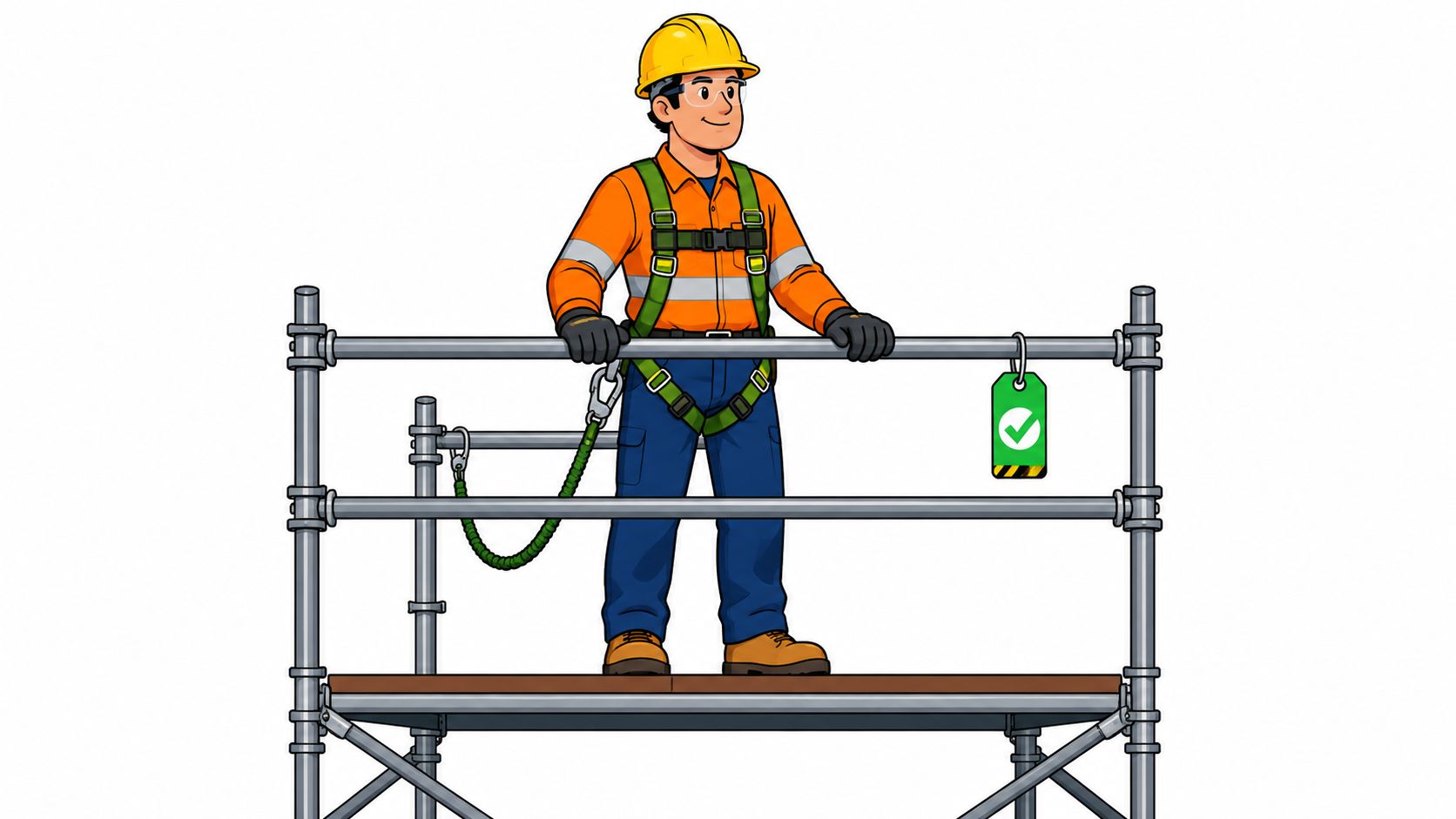
A scaffold tag dated before a bay was altered is a fail. The tag describes a structure that no longer exists. Compare the tag date with the last modification, and confirm a competent person inspected the scaffold before use.
A scaffold tag is a status. If the bay changed after the date on the tag, the tag is wrong.
On the harness, check fit and whether a rescue plan exists for that task. A generic paragraph copied from another job does not count. Ladders are for access. If someone is working from the rungs, the method has already drifted. The worker on the platform below is only as protected as the system you can see.
4. Excavation and trenching controls
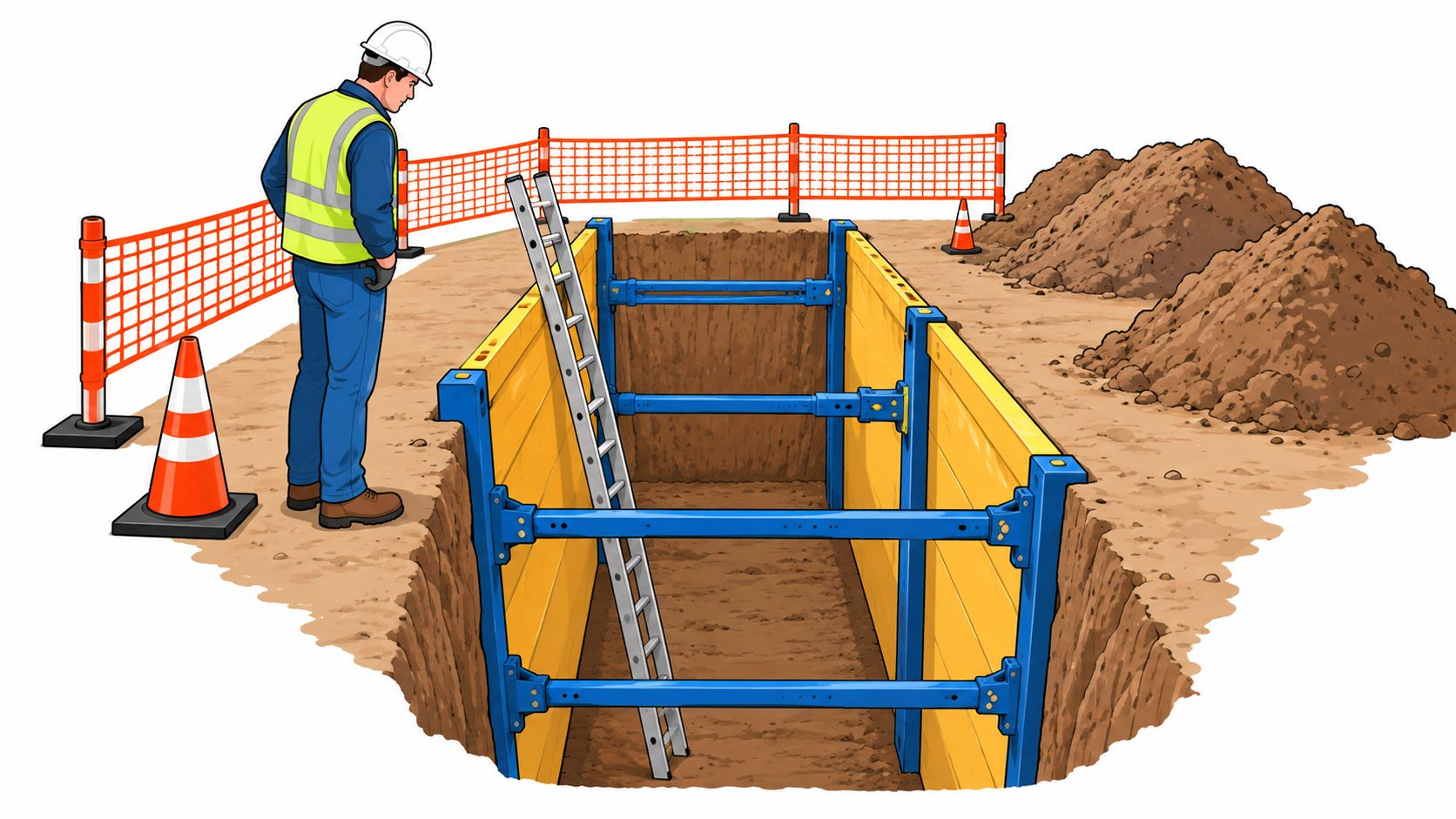
Open the trench record, then walk the trench. Excavation deeper than 1.5 metres is generally high risk construction work under the model WHS Regulations. It needs a SWMS and inspection by a competent person. Shoring, battering or benching has to match the ground you are looking at, not the sketch from tender stage.
The failure that shows up after rain is predictable. Spoil sits on the edge, the batter has slumped, and the daily inspection was not written up because the crew started early. Services are the other half. Locates must be dated before digging started. A locate saved after the bucket has already been in the ground is a record of a miss, not a control.
What to confirm before anyone enters
- Daily inspection: A competent person's check is recorded before work starts, including after rain or any change in ground conditions.
- Service locates: Dates sit before excavation, and marks on the ground still match the plan.
- Spoil and materials: Loads, pipes and spoil are kept back from the edge.
- Egress: Ladders or ramps are still reachable along the length being worked, not only at the end photographed last week.
In New Zealand the legal frame is different. Planning for this work sits in the site-specific safety plan under the Health and Safety at Work Act 2015, not in an Australian SWMS. WorkSafe New Zealand's site-specific safety assessment is a useful cross-check for emergency actions, hazardous substances, public interfaces and restricted access where several trades overlap. It does not replace Australian WHS duties.
5. Hazardous chemicals register and SDS management
A bottle on the bench is auditable only when it appears on the register and workers can access its safety data sheet (SDS) at the point of use. Start with the products workers reach for most. On multi-site audits, use the same sampling method at each site so results can be compared.
Trace each sampled product from its label to the register, then to the SDS. Check that the document matches the product and reflects the supplier's current version. A dated file alone does not confirm that the formulation is unchanged.
A cleaning crew's solvent is a common gap. It may be in use without appearing on the register, and the crew may not have its SDS. Check decanted spray bottles too. If the contents cannot be identified, workers cannot confirm the right controls.
Use section 8 of the SDS as a field check. The listed gloves, respirator and eye protection should match what the worker is wearing for that product. Check storage and segregation at the same time. Oxidisers stored beside fuels, or flammables kept in a hot shed without suitable containment, need corrective action even when the register is complete.
For document control, safety data sheet management should give workers access to current files and help site teams identify products with no SDS. A register stored only on a supervisor's laptop is out of reach for crews working several floors away.
Record each mismatch, assign an owner and set a close-out date. If the product on the bench is missing from the register, update the register the day it arrives.
6. Electrical safety and temporary power
A board carries a test sticker dated last month, but the register shows its last inspection was a year ago. Check the label against the register, then inspect the board in use. Temporary power takes a beating as sites change: boards get moved, leads get pinched, and workers may bypass an RCD when a tool keeps tripping. Check that the site electrical plan reflects AS/NZS 3012 and matches the equipment on site.
Trace a sample of leads from the board to the tools. Inspect each plug, drum and cable entry for damage, and look for trip hazards such as a lead crossing a stairwell. A test record can be current while the lead is cut at the drum. Isolate damaged leads, tag them out and record who removed them.
Buried services belong in the excavation check. For overhead lines, compare actual clearances with the site exclusion controls as cranes, booms and tippers move. Recheck after site conditions change, including when a tower crane is erected.
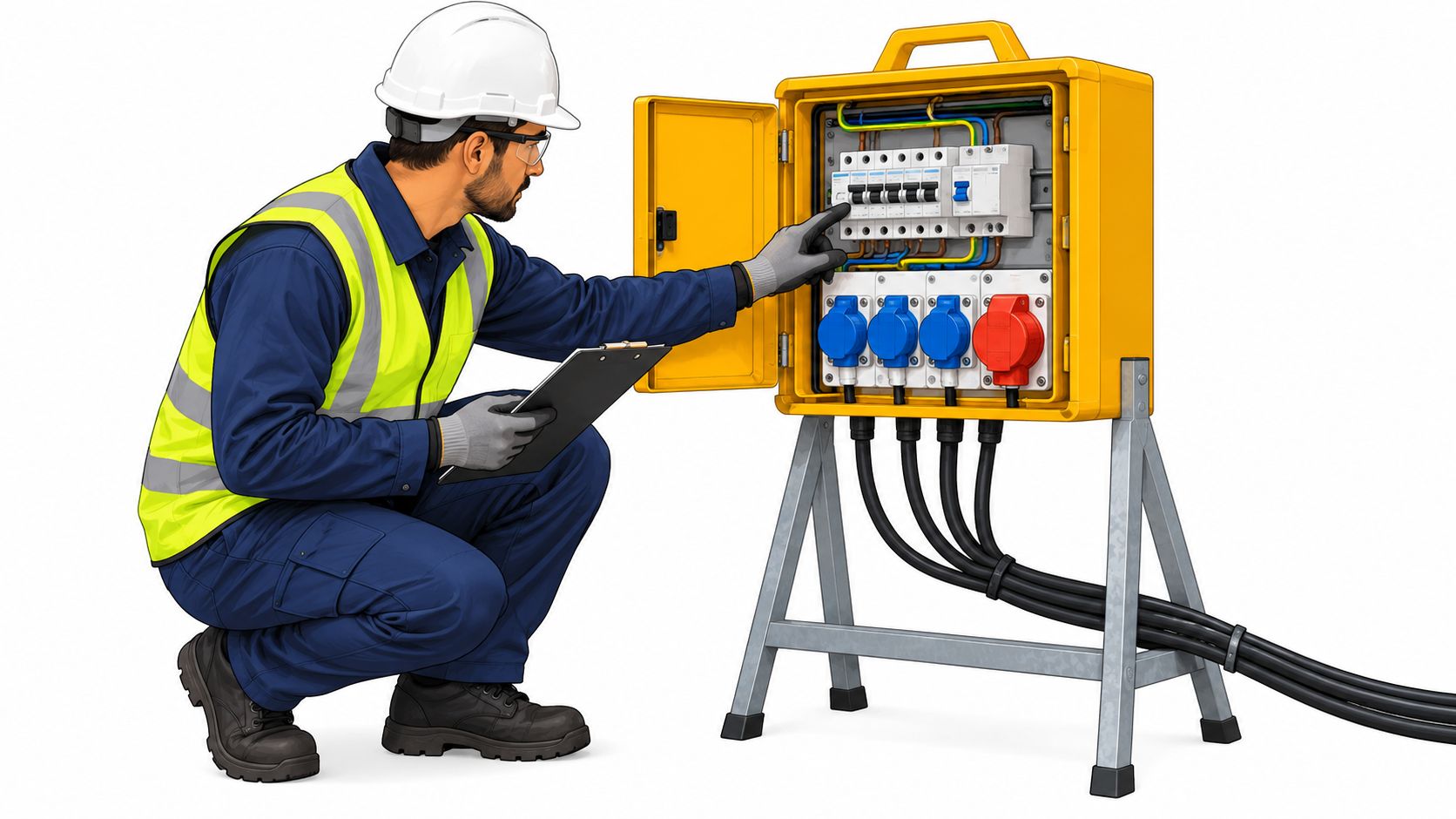
Keep faults inside permanent switchboards with a licensed contractor. A site leading hand should not open the equipment to reset it. If the fault is in a permanent installation, arrange a commercial electrical repair. For temporary construction supply, isolate and tag the affected equipment, then assign an owner and due date for the repair.
7. Contractor and subcontractor management
A PCBU with management or control of a workplace owes duties to workers of other businesses on that workplace, not only to its own employees. The audit question is simple. Who is on site today, and were they cleared before they started?
Pull the subcontractor list and sit it next to the daily sign-in. Then ask for the sub-subcontractor list. The names that appear on site and nowhere else are the finding. Expired documents are the other pattern. A public liability certificate that lapsed two weeks ago, while that trade is still fixing flashings, means the reminder system failed and someone chose not to stop the work.
Insurance dates have to cover the planned work dates, not the date the folder was first compiled. Licences should be checked with the issuing regulator where that option exists, because a PDF can be cropped. Specialist trades are not exempt. A crew brought in for reducing disruption during office repainting still needs current insurance, a site induction and a method that matches the area they are in.
How to manage subcontractors in construction only works when start dates, insurance expiry and induction status sit against the same company record. A filing cabinet does not send a reminder two weeks before a policy ends. Sample one trade that started this week and one that has been on site for a month. If the new starter's documents were loaded after they began work, prequalification is theatre.
8. High risk work controls for SWMS, permits to work and JSAs
The SWMS says a barricade is in place. On site, the crew is working beside an unprotected edge. Compare the document with the job before checking anything else.
Under section 299 of the Work Health and Safety Regulation 2011, WorkSafe Queensland's inspection criteria require the SWMS to be prepared before work starts, identify the work, list its hazards and risks, and set out controls specific to the task. If the controls are not being followed, stop the work as soon as it is safe to do so. Restart only after the work is brought back in line with the SWMS.
Check how the document was developed, too. Ask the crew lead when the SWMS was last reviewed and which hazard has changed since then. If they cannot identify a change, the consultation process needs checking. Safe Work Australia's formwork and falsework guidance says workers and their health and safety representatives must be consulted during preparation, when the SWMS is first made available if they were not involved earlier, and during review.
Keep the SWMS readily available while the high risk work is under way. Review it if the work, system or location changes, new hazard information emerges, a related notifiable incident occurs, or controls prove ineffective. After a notifiable incident, retain it for at least two years. WorkSafe Queensland's house relocation guidance sets out these review and retention requirements.
Check permits for hot work, confined spaces and isolations against the task and confirm approval came before work began. For crews using a job safety analysis alongside a SWMS, settle which document governs each task before scoring the audit. The difference between a JSA and a SWMS helps clarify their distinct purposes. For multi-site builders, sample one live high risk task at each site, record any gap between the paperwork and the physical controls, and assign an owner and close-out date.
8-Point Construction Safety Audit Checklist Comparison
Use the table to turn each audit area into a field test. Sample records, then check whether they match the people, equipment and work present on site. For multi-site builders, apply the same sampling approach at each site so results can be compared.
| Safety Audit Area | Audit Sample | Field Test | Record the Finding |
|---|---|---|---|
| Site induction and training competency records | Select names from the sign-in records and current crew list | Compare sign-in entries with the daily labour hire and subcontractor names at the gate. Ask a sample of workers to describe the task they are authorised to perform. | Record unmatched names, missing evidence and any task assigned beyond a worker's verified competency. |
| Plant, equipment and tool inspection | Select items from the asset register, including hired equipment | Find each item on site. Match its ID and inspection status to the register, then check the physical condition and any current defects. | Note assets that cannot be located, lack a matching record or remain in use despite a defect. |
| Working at heights and fall prevention | Choose active work fronts involving roof work, scaffolding, work platforms or unprotected edges | Compare the planned controls with the set-up in use. Check access, edge protection and whether workers can show how the selected system is inspected and used. | Identify differences between the documented method and the actual work area. |
| Excavation and trenching controls | Select an open excavation and its supporting records | Match the excavation location to service information. Check whether the access, ground conditions and protective measures match the current site conditions. | Record changed conditions, missing controls and any mismatch between the work area and its records. |
| Hazardous chemicals register and SDS management | Select products from the register and from work areas | Match product names and labels to the register and SDS. Check that the documents describe the product workers are handling. | Note unlisted products, mismatched documents and records that workers cannot locate at the point of use. |
| Electrical safety and temporary power | Sample leads and temporary power equipment in active work areas | Trace each lead from the supply to the tool. Check the drum, plug and cable entry, then compare inspection status with the site record. Tag out any lead that fails. | Record the item ID, defect, location and whether it was removed from use. |
| Contractor and subcontractor management | Select businesses working on site and a sample of their workers | Match the contractor list to gate or sign-in records. Check that each sampled business has current approval records for the work it is performing. | Flag businesses or workers on site without a matching, current record. |
| High risk work controls: SWMS, permits to work and JSAs | Sample active high risk tasks and their supporting documents | Match the task, location and work method to the documents in use. Check approval timing and whether the current conditions are reflected in the controls. | Record documents that do not match the task, location or controls observed on site. |
Score It, Assign It, Close It Out
A scaffold can pass on paper while a guardrail is missing on site. Score each of the eight checks on the same three-point scale across every project.
Pass means you observed the control and a worker could explain it. Rectify now means the risk is fixed before you leave that work front, and you record what changed. Corrective action means the fix needs parts, a revised method, a new document or a discussion with an absent subcontractor. Assign each action an owner, due date and risk rating. Then check the control on site before closing it. An email photo alone does not confirm that the scaffold, trench or switchboard is safe.
Queensland's construction regulator ran 224 proactive assessments of tier-one, tier-two and tier-three sites between July and September 2024. Inspectors found non-compliances in 59% of assessments and issued 181 enforcement notices, including 138 improvement notices and 35 prohibition notices, according to the WorkSafe Queensland construction report. These figures cover one quarter in Queensland, not the national industry. Use findings to set an escalation path: record the duty holder, activity, failed control, whether work stopped and the evidence that it restarted only after the control was restored.
Compare results by site, subcontractor and audit category. Separate repeat failures from one-off misses. Scheme-accredited companies recorded a lost-time injury frequency rate of 1.55 in 2024, compared with 1.50 in 2023, according to the Federal Safety Commissioner's 2024 Annual Data Report. The same report gives a total reported injury frequency rate of 6.49 for those companies in 2024, more than 3% lower than in 2023. It reports a TRIFR of 10.69 for commercial construction and 3.48 for civil construction. The report also records three fatal incidents on Scheme-accredited building sites in 2024. Keep building and civil results separate when comparing sites. Ask the same questions each week, and test each answer against the physical work.
Include psychosocial hazards in the audit. Safe Work Australia's strategy case studies report 649 NSW inspector audits between 1 July 2025 and 30 April 2026, with 376 notices, including five prohibition notices for gaps in psychosocial risk management, in the Australian WHS Strategy case studies. Ask how schedule pressure, rework, fatigue and limited supervision affect physical controls. If workers feel unable to stop unsafe work, a tick beside a fall-prevention check is not enough.
Keep the audit trail where site teams can find it next week. Safety Space stores inspections and audits, corrective actions and site records in one system, with browser access and offline use through iOS and Android apps. A supervisor can assign an owner before leaving the work front. Review overdue actions by site each week, then re-audit failed controls after their due dates. Close an action only when the site matches the record.
Safety Space replaces paper audit forms and scattered spreadsheets with inspections, SWMS sign-on, chemical registers, contractor documents and corrective actions organised by site, including offline use on site. To keep a close-out trail across active jobs, visit Safety Space and select the modules your sites use.
Ready to Transform Your Safety Management?
Discover how Safety Space can help you implement the strategies discussed in this article.
Explore Safety Space FeaturesRelated Topics
Safety Space Features
Explore all the AI-powered features that make Safety Space the complete workplace safety solution.
Articles & Resources
Explore our complete collection of workplace safety articles, tools, and resources.