
A plumbing crew arrives to connect a sewer line, then discovers the work includes an excavation, nearby services and a confined access point. The original job description said “routine drainage connection”. The actual work requires a safe work method statement plumbing process that reflects the hazards, controls and people involved before anyone starts.
A SWMS fails when it sits in a folder while the job changes around it. It also fails when it focuses on falls and trenches but says little about pipe lifting, overhead work, awkward access or repeated tool use. The document needs to guide the crew through the work as it will happen, then change when the conditions change. Our guide to safe work method statements covers the basics if you need them.
Table of Contents
- Legal Duties for Plumbing High-Risk Work
- Identifying High-Risk Triggers on Site
- Selecting Controls for Plumbing Hazards
- Structuring the Method Statement Document
- Managing Version Control and Field Updates
- Pre-Start Verification and Handover Checklist
Legal Duties for Plumbing High-Risk Work
A roof vent repair can become high-risk construction work when the access route exposes workers to a fall. A drainage connection can trigger the same obligation through excavation. Plumbing work commonly involves several risk categories on one site, including work at heights above 2 metres, trenching or excavation, confined spaces, asbestos and energised equipment, as outlined by SafeWork NSW construction guidance.
The PCBU carrying out high-risk construction work must prepare the SWMS before the work starts. The document must identify the high-risk activities, the hazards and risks that could arise, and the controls that will be used. A copy must be given to the principal contractor, and the workers carrying out the task must work in accordance with it. Safe Work Australia describes these duties under the model WHS laws in its guidance on high-risk construction work requiring a SWMS.
A live compliance document
Treating a SWMS as a completed form creates a gap between the planned method and the work on the ground. SafeWork NSW requires the document to be prepared before high-risk work starts, given to the principal contractor and updated when control measures change. That makes it a live compliance document, not a one-off attachment to a purchase order.
The practical duty is broader than drafting. The PCBU must ensure the SWMS is kept, followed and reviewed during the project. If the crew changes the access method, discovers an unexpected service or moves into a different work area, the supervisor must stop and determine whether the existing controls still apply.
Practical rule: If the work method changes, the SWMS must be checked before the changed method continues.
A useful plumbing compliance resource can help businesses consider the wider compliance environment, although Australian contractors must apply the requirements of their own state or territory. The EZ Plumbing compliance guide is relevant background reading, but it doesn't replace Australian WHS obligations.
What the principal contractor needs
The principal contractor needs a document that is specific enough to assess and supervise. “Use appropriate PPE and follow safe procedures” doesn't explain how a worker will control a suspended pipe, enter a confined space or work beside an excavation. A defensible SWMS links each work step to a hazard and a control that a supervisor can observe.
For a practical explanation of the PCBU role, use this PCBU responsibilities guide. The key operational point is simple. The business that carries out the high-risk work owns the method statement, while the principal contractor must receive it and manage coordination on the site.
Identifying High-Risk Triggers on Site
Not every plumbing task requires a SWMS. The threshold is the type of work and its hazards, not the trade label, job description or apparent simplicity of the task. Safe Work Australia identifies 18 high-risk construction work activities under the WHS Regulations, so operations managers should screen the scope before mobilisation rather than waiting for a principal contractor to reject the paperwork.
Use the following filter during planning:
- Work near a confined space: Drainage tie-ins, tanks, pits and other restricted areas can trigger the requirement when the work is in or near a confined space.
- Work near a deep shaft or trench: Work in or near a shaft or trench deeper than 1.5 metres, or in a tunnel, is a specified trigger. A trench can become high-risk even when the plumbing task itself is straightforward.
- Work requiring temporary support: Structural alteration or repair that needs temporary support to prevent collapse must be identified as high-risk.
- Work near pressurised gas: Work on or near pressurised gas mains or piping can trigger the SWMS requirement.
- Other listed activities: Check the remaining high-risk categories where the project involves energised services, asbestos, hazardous atmospheres, mobile plant, roads, railways, water, structural work or other regulated activities.
Screen the scope before the crew travels
Start with the drawings, site inspection and work sequence. Don't assess only the final installation. The route to the installation may involve roof access, lifting through a ceiling, excavation, temporary support or isolation of an energised service.
Ask five questions:
- Where will workers stand? Identify roofs, platforms, ladders, excavations, pits and restricted work areas.
- What services are nearby? Confirm gas, electrical, water, refrigerant and other services before work begins.
- What must workers handle? Identify pipe lengths, fittings, plant, tools and materials that require lifting, holding or repositioning.
- Can the work change category? Rough-in may occur in an open area, while the later connection may require confined space controls.
- Who needs the document? Confirm the principal contractor's submission, approval and site access process before mobilisation.
A principal contractor may stand down a crew that arrives without an acceptable SWMS. That delay is avoidable when the scope review happens during planning. For related household plumbing risk information, safe boiling tap maintenance provides useful context, but high-risk construction work still needs a job-specific WHS assessment.
Selecting Controls for Plumbing Hazards
A plumbing SWMS that lists fall prevention, trench collapse and confined spaces but ignores the physical demands of the trade is incomplete. WorkSafe Victoria's plumbing guidance notes that 9 per cent of plumbing injuries were to the shoulder in its referenced injury profile, as stated on the WorkSafe Victoria plumbing page. That figure points to a practical weakness in many templates. They address dramatic hazards well, but understate the repetitive and awkward work that crews perform throughout the day.
Manual handling controls need the same precision as fall controls. A strong document describes how workers will move pipe, how they will hold it during installation, how overhead work will be limited and what equipment will reduce force. WorkSafe Victoria plumbing guidance identifies mechanical load-shifting devices such as hand trucks and pipe trolleys, along with mechanical devices that lift and hold pipes in position.
Deal with height exposure first
Victoria's plumbing module sets out a clear approach to height work. First ask whether the task has to be done at height. If possible, complete it from the ground. If height access is unavoidable, use the preferred sequence below:
- Temporary work platforms or scaffolding
- Work positioning systems
- Fall injury prevention systems
- Ladders, only where they can be used safely for the task
This sequence matters because ladders often become the default through habit rather than risk assessment. A supervisor should challenge the proposed access method, particularly where the worker must carry materials, use both hands, apply force or remain in position for an extended task.
Write manual handling controls that crews can use
“Use correct lifting techniques” isn't an adequate control for repeated pipe installation. It shifts responsibility to the worker without changing the task. Write the control beside the actual work step:
| Work activity | Weak control | Usable control |
|---|---|---|
| Moving long pipe | Lift safely | Use a pipe trolley or hand truck where access permits, and keep the travel path clear before moving the load |
| Holding pipe overhead | Avoid strain | Use a mechanical lifting or holding device, or change the installation sequence so the pipe is supported before connection |
| Working in a small access area | Take care | Reduce manual repositioning, stage materials close to the work point and rotate tasks where the method permits |
| Using vibrating tools | Wear PPE | Select suitable equipment, maintain it, limit unnecessary exposure and include task rotation where appropriate |
The control should identify the equipment, the point in the sequence where it applies and the person responsible for checking it. For broader guidance on writing practical controls, see control measures for risks.
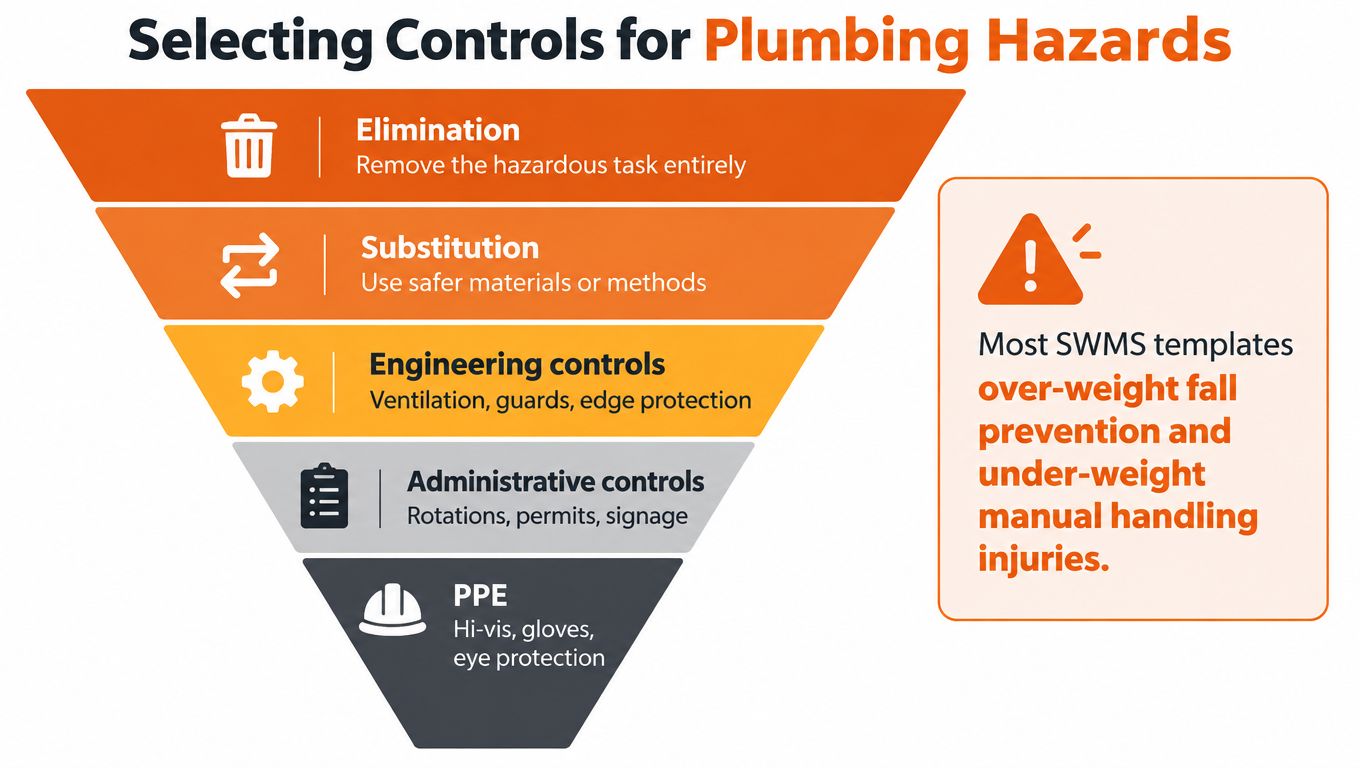
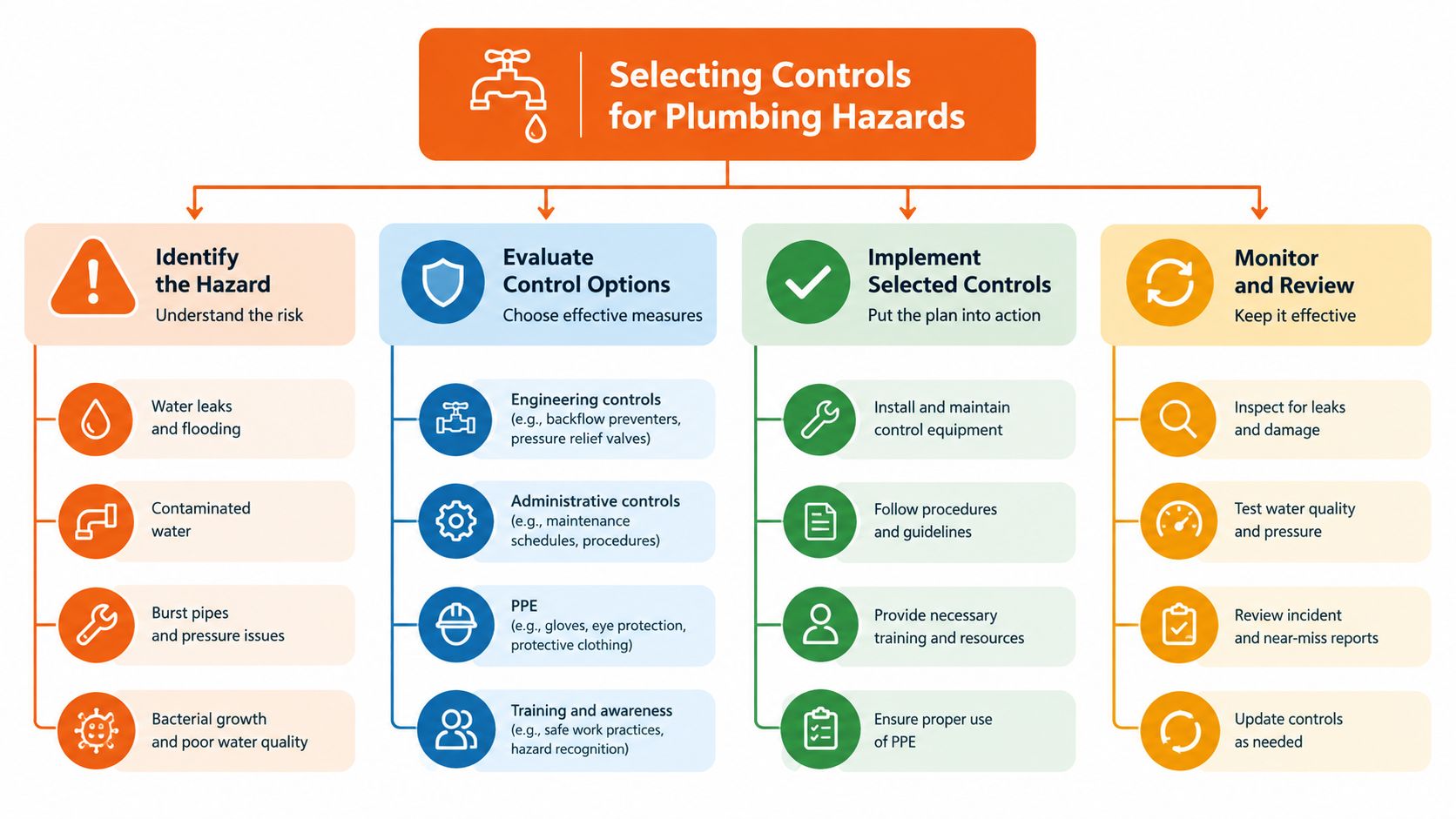
The hierarchy of controls still applies. Eliminate unnecessary height exposure. Substitute a safer method or material where possible. Use engineering controls such as edge protection, ventilation, guards or mechanical lifting. Add administrative controls such as sequencing, permits and task rotation, then use PPE as the final layer rather than the main answer.
Structuring the Method Statement Document
A useful SWMS follows the work in the order the crew will perform it. Safe Work Australia's model Code of Practice says the document must describe the work in a logical sequence, identify the hazards and risks, and explain how controls will be implemented, monitored and reviewed. A template becomes useful only when it follows the actual job rather than forcing a complex installation into broad headings.
Start with the work scope and the high-risk activities. Name the location, access constraints, relevant services, plant and materials. Then break the task into steps such as:
- Site access, induction and work-area setup.
- Delivery, unloading and staging of pipe and equipment.
- Isolation and verification of relevant services.
- Access to the work area.
- Excavation, penetration, lifting or installation.
- Testing, connection and commissioning.
- Demobilisation and removal of temporary controls.
Pair each step with a specific control
A supervisor should be able to read across the document and answer three questions immediately:
- What can harm someone at this step?
- What control must be in place before the step starts?
- How will the supervisor know the control is working?
For example, “excavate for drainage connection” is not enough. The hazard column should consider collapse, underground services, plant interaction, access and falling materials. The control column should state the required service location process, exclusion arrangements, excavation access, spoil placement and inspection responsibilities that apply to that site.
A good SWMS tells the worker what to do next. It doesn't merely describe the hazard in formal language.
Avoid combining unrelated activities under “plumbing installation”. Pipe delivery, overhead installation, hot work, service isolation and testing can have different hazards and different controls. Separating them makes consultation more useful and gives the supervisor a clear point at which to stop the job if conditions change.
Make controls observable
Weak wording includes “take care”, “use appropriate PPE”, “work safely” and “follow site procedures”. These statements may sound compliant, but they don't establish a measurable action. Replace them with instructions such as “use a pipe trolley for the staged movement from the delivery point to the installation area” or “verify isolation before removing the fitting”.
Include monitoring and review beside the control. State who checks the setup, what triggers a pause and what record confirms the review. A SWMS should support the crew during the task, not just satisfy a document request before mobilisation.
Managing Version Control and Field Updates
The office version of a plumbing SWMS is often accurate when drafted and wrong by the time work begins. The crew may find an unrecorded service, lose the planned access route, change from rough-in to service connection or discover that the intended lifting device can't reach the work point.
SafeWork NSW states that a SWMS for high-risk construction work under the Work Health and Safety Regulation 2025 must be kept, followed and reviewed during the project, as set out in its guidance on preparing a SWMS. The review isn't an administrative exercise. It tests whether the controls still match the work.
Use a controlled change process
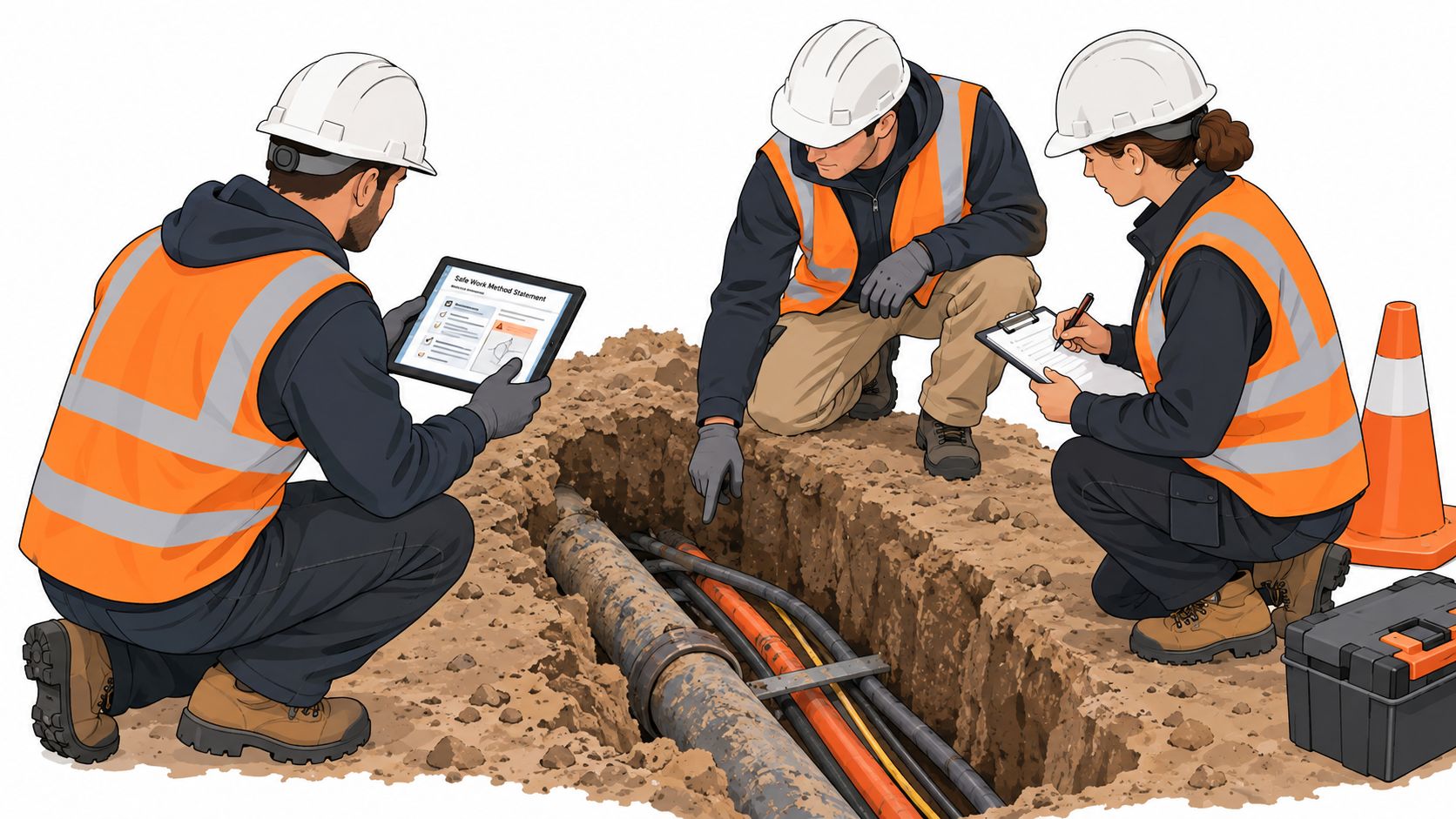
When site conditions change, the supervisor should pause the affected activity and record:
- The change: What is different from the approved method?
- The consequence: Which hazard or control is affected?
- The revised method: What will the crew do now?
- The consultation: Which workers, supervisors or HSRs reviewed the change?
- The issue record: Which version is current, and who received it?
The updated document should identify the revision, date, affected work step and approving person. Workers need access to the current version, and superseded versions should remain traceable without being mistaken for the live method.
Paper can work on a stable, single-site job with disciplined supervision. It becomes unreliable when several crews and subcontractors receive different copies, handwritten changes aren't redistributed or the principal contractor is working from an older version. Handwritten amendments may be made on site under Victorian guidance, but the business still needs a process to capture, communicate and retain those changes.
Make field access part of the control
A digital system can give supervisors and workers access to the job-specific SWMS from a phone or tablet, record acknowledgements and maintain a revision history. It doesn't remove the need for competent review, worker consultation or site supervision. It reduces the risk that a crew follows an obsolete copy.
Safety Space's document management program is one option for organisations managing controlled safety documents across sites and subcontractors. Whatever system you use, define the owner of each document, the approval path, the distribution method and the trigger for reissue.
Pre-Start Verification and Handover Checklist
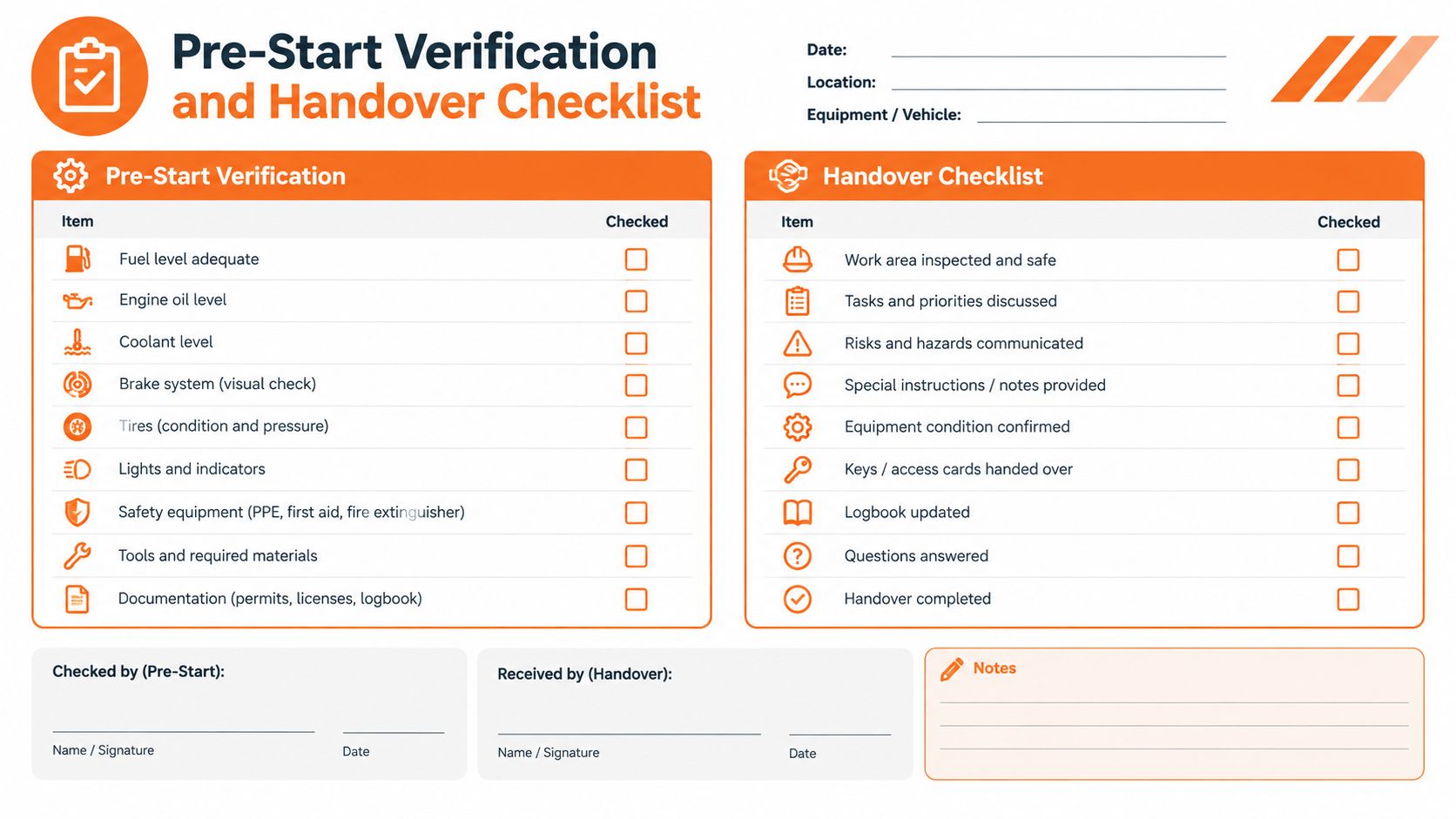
The supervisor should verify the SWMS at the work location, not merely confirm that a file exists. Safe Work Victoria requires preparation before high-risk construction work starts and supports involving relevant employees, HSRs and supervisors where possible. The review should cover site-specific factors, hazards, risks, controls and any updates needed.
Use this pre-start check before the crew begins:
- Scope confirmed: The document matches the actual plumbing activities, location and sequence.
- High-risk triggers identified: Heights, excavation, confined spaces, asbestos, energised equipment, gas piping and other applicable activities are addressed.
- Controls available: Required platforms, edge protection, isolation equipment, lifting devices, pipe trolleys and PPE are on site and fit for use.
- Workers consulted: Relevant employees understand the method, hazards and stop-work conditions.
- HSR involvement considered: The HSR and supervisor have had a reasonable opportunity to contribute where practicable.
- Principal contractor handover complete: The current SWMS has been provided through the required site process before work starts.
- Emergency arrangements checked: Access, communications, first aid, rescue and escalation arrangements match the location.
- Version verified: The crew has the current issue, and obsolete copies are removed or clearly marked.
- Change process understood: Everyone knows who can approve an amendment and when work must stop for review.
A sign-on sheet alone doesn't prove understanding. Ask the crew to explain the critical controls in their own words, then observe the first stage of work. If the method can't be followed with the equipment and access available, revise it before the task continues.
Safety Space provides a customisable H&S management platform for live forms, controlled documents and multi-site or subcontractor oversight, including access to job-specific SWMS records. Visit Safety Space to review how its digital workflow could support plumbing SWMS updates, approvals and field verification.
Ready to Transform Your Safety Management?
Discover how Safety Space can help you implement the strategies discussed in this article.
Explore Safety Space FeaturesRelated Topics
Safety Space Features
Explore all the AI-powered features that make Safety Space the complete workplace safety solution.
Articles & Resources
Explore our complete collection of workplace safety articles, tools, and resources.