Check the handover record before the next crew climbs the scaffold, then walk the structure from the ground up. A scaffold can look sound beside a residential frame or factory maintenance job while a sole board has settled, a tie has disappeared or an access gate has been left open. A current tag won't reveal those changes unless someone checks the structure behind it.
Eight checks decide whether a scaffold is safe to use. This scaffold inspection checklist follows a practical site route, from authorisation and foundations through the frame, edge protection, access and working platforms. Each check pairs the defect with the immediate action and the record needed afterwards.
Keep these inspection activities separate:
- Pre-use handover: A competent person verifies the completed scaffold against its design and authorises use.
- Daily visual checks: Site personnel look for damage, missing components, unsafe loading and changed conditions before work starts.
- Formal re-inspection: A competent person assesses the scaffold after relevant events, repairs or changes, and at the required intervals.
A supervisor's visual check doesn't replace a competent-person inspection. Equally, a signed handover doesn't excuse ignoring a defect found during the working day.
Walk only where safe access already exists. Nobody should climb an incomplete scaffold to finish a checklist, and nobody should attempt an improvised repair because the scaffolder is unavailable. An unresolved safety-critical defect means stopping use, controlling access and arranging competent assessment.
Table of Contents
- 1. Pre-use inspection by a competent person
- 2. Base plates, sole boards and ground conditions
- 3. Standards, ledgers, transoms and bracing
- 4. Guardrails, mid-rails, toe boards and edge protection
- 5. Access, ladders, stairs and ramps
- 6. Platforms, planks, decking and load limits
- 7. Overhead powerlines, falling objects and public protection
- 8. Post-event, alteration and periodic re-inspection
- What each scaffold check covers, when it applies and what usually fails
- Where to Start on Your Next Scaffold Inspection
1. Pre-use inspection by a competent person
Start at the scaffold identification and handover point, not the ladder. Match the scaffold's location and identification to its design, inspection record and current status tag.
For the specified scaffold types, including scaffolds where a person or thing could fall more than 4 metres, Safe Work Australia's inspection and maintenance guide requires competent-person inspection and written confirmation that construction is complete before use, with inspections at least every 30 days and before use after relevant incidents or repairs. The guide also recommends before-use and change-triggered inspections for scaffolds below that fall-risk threshold.

Verify the authority behind the tag
The procedure should identify the inspector's competency basis, including relevant scaffolding knowledge, experience and applicable licensing. A job title alone isn't evidence of competence.
- Check: Written handover, scaffold identification, intended use, restrictions and inspector details.
- Failure: Missing handover, mismatched identification, incomplete construction or an outdated tag.
- Action and record: Prevent access until competent assessment confirms release. Retain the signed handover and update the visible status.
Say a residential framing crew arrives before the scaffolder finishes handover. Programme pressure doesn't authorise use, even if the platforms appear complete.
A colour-tag system helps communicate status, but the tag isn't the inspection record. Related harness and lanyard checks belong in the fall protection equipment inspection checklist, not as substitutes for scaffold verification.
Overseas material such as scaffold inspection guidance for UAE contractors shouldn't determine Australian inspection duties. New Zealand procedures should instead reference the Health and Safety at Work Act 2015 and WorkSafe NZ guidance, rather than importing Australian inspection intervals.
2. Base plates, sole boards and ground conditions
Walk the perimeter before approaching the access point. Look beneath every visible standard, including bases behind stored materials, temporary fencing and vegetation.
Ground support needs more than a quick check for timber boards. Safe Work Australia's general scaffolding guide calls for competent assessment that the ground can support the most adverse reasonably foreseeable combination of dead, live and environmental loads during erection, use and dismantling.
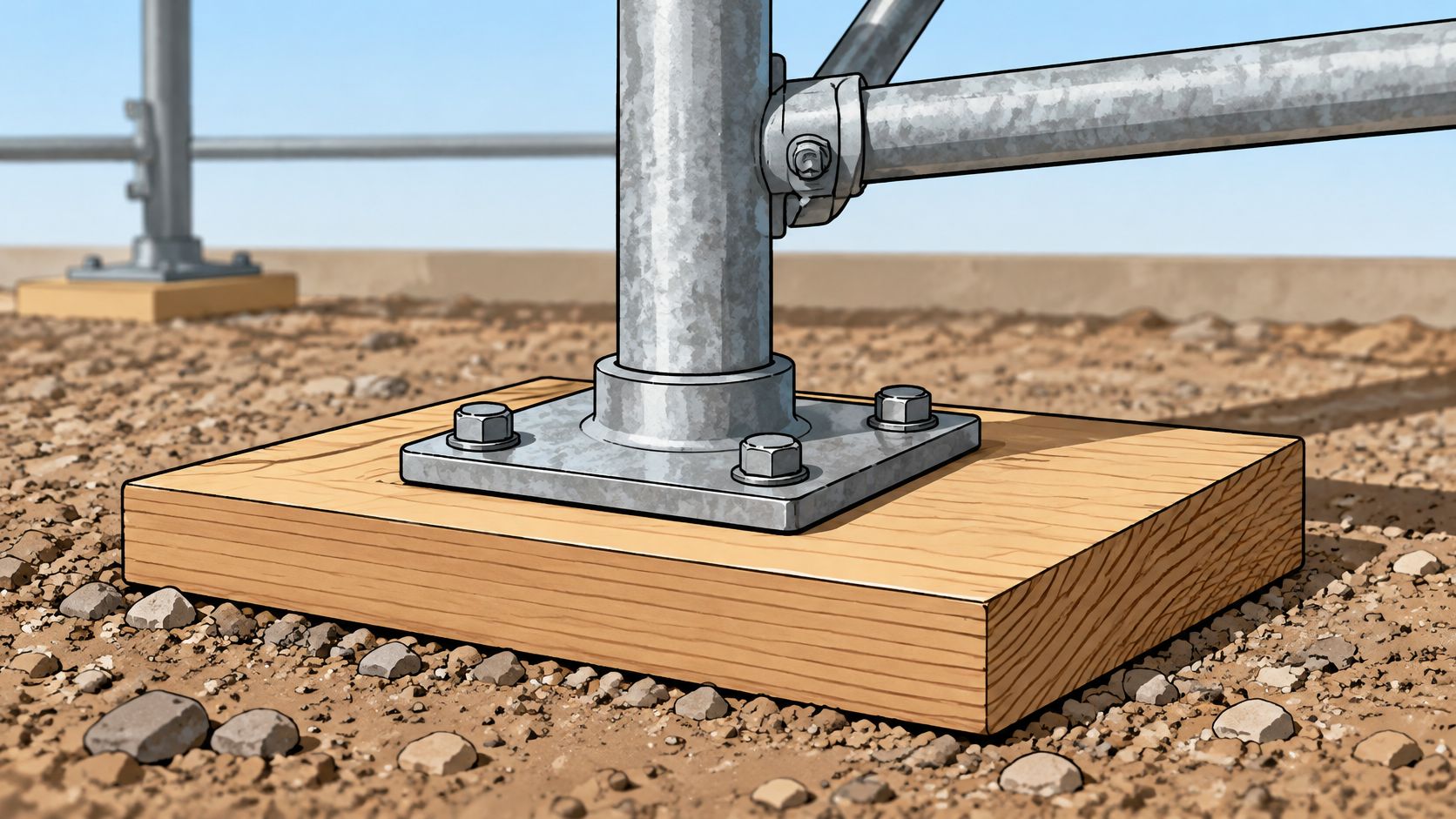
Check that base plates bear fully on suitable support. Examine sole boards for splitting, crushing, movement and unsupported sections, and compare adjustable-jack extension with the scaffold system's instructions and design.
- Ground failure: Soft fill, ponding, washout, excavation or a service trench undermining support.
- Component failure: Missing or distorted base plates, damaged jacks, improvised packing or loose locking arrangements.
- Required response: Stop use where support is uncertain. Arrange assessment and an authorised repair method rather than adding bricks or timber offcuts.
After heavy rain on a commercial site, a supervisor might find a sole board sinking while the adjoining bases remain apparently level. The response is to isolate the affected scaffold and assess the structure, not just pack the low corner.
Practical rule: A base that has moved is evidence of a support problem, not an invitation to adjust the jack.
Record the base location, ground condition, photographs, immediate isolation and corrective-action owner. Keep initial-condition photographs for comparison, then retain repair details and competent-person approval before release.
3. Standards, ledgers, transoms and bracing
A contractor removed a tie on Tuesday to move pallets through an opening. By Friday the bay still carried load, the ledger line looked straight, and the missing connection was easy to miss from the ground. Walk the frame bay by bay and compare it with the current drawing, counting standards, ledgers, transoms, braces, ties and anchors rather than trusting symmetry.
Check standards for plumb and alignment, ledgers for level, transoms for bearing and support, and every coupler, locking device, brace, tie and anchor for full engagement. Bent tubes, cracked welds, heavy corrosion, loose fittings and missing bracing are defects, and improvised repairs on the working scaffold are out.
Check the structure against the plan
Australian scaffold control starts before handover. Safe Work Australia's scaffold guidance supports lifecycle checks across planning, erection, use and change, including verification of a safe system of work such as a SWMS, SOP or JHA.
The site checklist should name the drawing revision and any authorised alteration. A supervisor can flag an obvious departure; replacement tie arrangements, mixed components and added sheeting need competent technical confirmation before acceptance.
- Pre-use handover: Match the erected frame to the drawing and sign-off, including tie spacing and bracing configuration.
- Daily check: Look for ties or braces removed for deliveries, façade work or services, plus fresh coupler marks or disturbed anchors.
- After alteration or impact: Stop use of the affected bay and have the competent person set inspection and release requirements.
Record the affected bay or elevation, the design discrepancy and the authorised correction. Close-out evidence should identify what was restored, who completed the work and who accepted the scaffold for use. A photo of a newly fitted tube does not show the tie arrangement is correct.
4. Guardrails, mid-rails, toe boards and edge protection
Inspect open edges from a safe position before entering the platform. Pay particular attention to end bays, loading points, ladder openings and gaps between the scaffold and building.
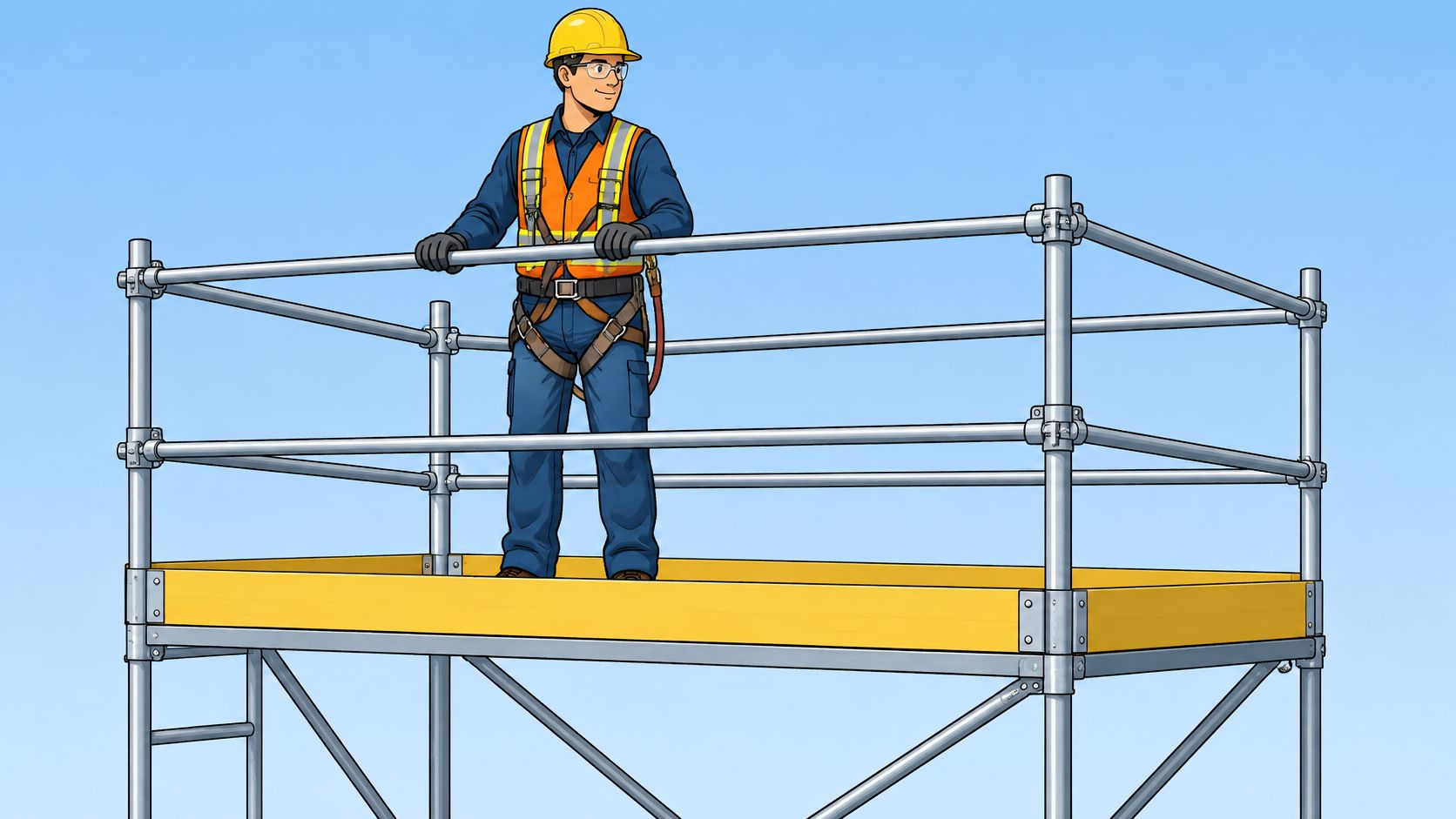
Check rails, toe boards, gates and their fixings against the design. Look for missing sections, loose connections, displaced toe boards and openings created when trades remove protection to pass materials.
SafeWork NSW's scaffolding industry safety standard identifies missing edge protection alongside incomplete decking, unstable foundations, inadequate ties and unsafe access as deficiencies requiring control. A checklist should make those failures impossible to dismiss with an unexplained tick.
Track removal through to reinstatement
Where a task requires temporary removal, use an authorised method with alternative controls, a named responsible person and a reinstatement check. A verbal promise to put the rail back isn't adequate change control.
- Failure: A labourer removes a guardrail for a delivery and leaves the edge open.
- Action: Stop access to the affected area, arrange authorised reinstatement and obtain the required verification.
- Record: Capture the opening's location, isolation, repair evidence and release decision.
In Safety Space, the inspections and audits module's drag-and-drop form builder can create an edge-protection checklist for field staff using the mobile app. Failed responses can trigger mandatory corrective actions, with photos attached to the inspection.
Where safety nets form part of the planned controls, use a separate safety net inspection checklist. A net doesn't justify accepting missing scaffold edge protection outside an authorised work method.
5. Access, ladders, stairs and ramps
An unsecured replacement ladder can turn an otherwise serviceable scaffold into an unsafe workplace. Start the access check at ground level and follow the actual route workers use, including transitions onto the working platform.
Inspect ladder restraints, stiles, rungs, stair treads, landings, handrails, ramps and access hatches. Compare their arrangement with the scaffold plan and system instructions, including landing positions, access dimensions and available handholds.
Don't accept an improvised ladder merely because it reaches the platform. A borrowed ladder may be damaged, unsecured or incompatible with the intended access arrangement.
- Check the route: Confirm adequate clear width and head clearance, secure footing and unobstructed landings.
- Check the transition: Look for awkward steps, open hatches, gaps and missing protection where the worker enters the platform.
- Remove obstructions: Keep leads, hoses, wrapping and stored materials away from the access route.
Separate housekeeping from access defects
Loose wrapping on a sound landing can be removed under normal site controls. A damaged stair, unsecured ladder or unsafe platform transition needs access stopped until an authorised correction is complete.
For example, a cleaning crew may replace a damaged access ladder with one from its vehicle. The supervisor should prevent use until the proposed arrangement has been checked and accepted, rather than signing it off because the crew has used that ladder elsewhere.
Access must be safe for the return journey as well as the climb, including when workers are tired or carrying permitted equipment.
Record temporary access changes so the next inspection covers them. Retain the defect location, replacement details and approval, and connect access checks with the broader working at heights safety procedure.
6. Platforms, planks, decking and load limits
A maintenance crew found a timber plank split along its length beneath stacked supplies. The wrong response is stepping onto the plank to clear the load. Isolate the bay, keep workers off the suspect decking, and let a competent person decide whether unloading can proceed or the plank comes out under a revised method.
Read the scaffold's load information before checking the materials already on it. The question is whether the current load matches the approved arrangement, not whether the platform looks crowded.
Check decking identification and suitability against the scaffold system and design. Examine planks and decks for splits, distortion, corrosion, damaged hooks, contamination and movement, then verify support, restraint, gaps and overhangs against the applicable instructions.
Inspect the load, not just the deck
A pallet of materials can concentrate load where the scaffold wasn't designed to receive it. Include workers, tools, equipment, waste and stored materials when reviewing the actual loading pattern. If nobody can confirm the rated capacity of a bay, treat it as unknown until the competent person does.
- Decking defect: A split plank, unsecured deck or incomplete platform requires controlled access and authorised replacement.
- Loading defect: Unapproved stockpiles or uncertain capacity require work to stop while the load and removal method are assessed.
- Housekeeping defect: Offcuts, wet residue and loose packaging need removal without creating exposure at an edge. Bag debris where it lies instead of carrying loose waste across open decking.
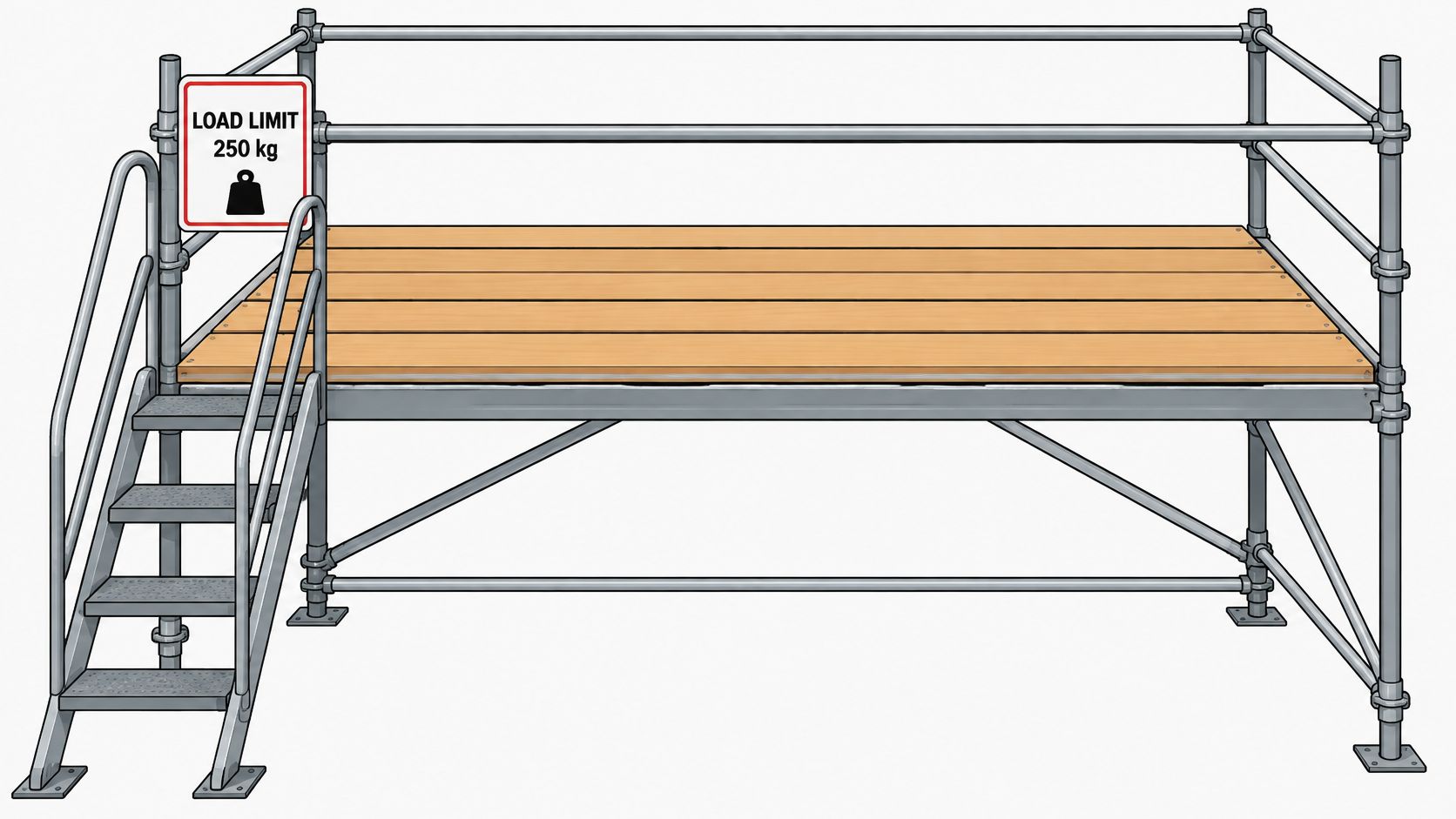
Display the permitted load information and restrictions at the access point. Designated storage positions are more useful than a general instruction to avoid overloading, particularly when several subcontractors share the scaffold.
The resulting record should identify the deck or bay, removed components, loading discrepancy and correction. Where the loading arrangement changes, retain the competent person's acceptance so the next inspection works from the approved arrangement rather than memory.
7. Overhead powerlines, falling objects and public protection
Step back and inspect the space around the scaffold. A structurally sound platform can still expose workers to electrical contact or allow materials to fall onto a footpath, driveway or operating plant area.
WorkSafe ACT's scaffolding safety alert reinforces the need to respond to events and changes that may affect scaffold safety. Apply that approach to adjacent activities as well as the scaffold itself.
Before erection, establish electrical controls with the powerline owner and relevant competent personnel. During inspection, check whether scaffold alterations, carried materials, delivery equipment or nearby work have changed the assessed exposure.
- Electrical interface: Confirm the approved exclusion arrangements remain effective. Don't estimate clearance by eye or assume a covered conductor is safe.
- Falling objects: Inspect toe boards, containment, catch fans and other specified protection for damage and gaps.
- Public interface: Check hoardings, barricades, signs and pedestrian diversions against the current protection plan.
- Plant interface: Look for vehicle routes, crane operations and deliveries that could strike the scaffold or breach exclusion zones.
Check protection after weather and site changes
On a property development beside a public footpath, wind might damage a catch fan without visibly disturbing the scaffold frame. Stop the affected work and control the area below until the protection has been repaired and checked.
Adding mesh or sheeting also needs review because it changes the scaffold's exposure to wind. Public protection shouldn't be improved by creating an unassessed structural problem.
Record the affected interface, photographs, temporary controls and the person responsible for repair. Keep revised protection arrangements with the scaffold records so crews don't continue checking against an obsolete site plan.
8. Post-event, alteration and periodic re-inspection
Any impact, suspected movement or unauthorised alteration resets the scaffold's status. Periodic checks still matter: set the interval from scaffold risk and site exposure, then bring the next inspection forward whenever a trigger occurs.
Write the triggers into the scaffold procedure and repeat them at shift handover. Include severe weather, ground erosion, plant contact, repairs, moved ties, added sheeting and adjacent excavation where they could affect stability, access or edge protection.
In its Scaff Safe in Construction findings report, SafeWork NSW reported that 95% of inspected scaffolds across 343 construction sites in its 2024 project had been inspected by a licensed scaffolder or competent person within the previous 30 days. The finding measures inspection recency only; it says nothing about defects found afterwards.
Re-open the inspection when conditions change
After a windy night, a supervisor finds a loose tie during the morning visual check. Stop use, control access and arrange a competent assessment. The repair then becomes part of a fresh inspection covering the tie, connected bracing and any movement it may have caused.
- Before re-inspection: Identify the event, isolate the affected scaffold and set immediate restrictions.
- During assessment: Check the changed condition against the design, inspect connected components and review outstanding defects.
- Before release: Verify repairs, record the competent person's decision and update the scaffold's status.
A qualified scaffolder or inspector must make the release decision. If that person is unavailable, keep the scaffold out of use and reschedule the affected work.
Close-out test: Release requires evidence that the event, affected components and completed repairs have been assessed and the scaffold is safe for its intended use.
Keep the trigger details, photographs, change records, repair notes and return-to-use approval together. The record should show when the scaffold was isolated, what changed and who authorised its return.
What each scaffold check covers, when it applies and what usually fails
Walk the scaffold the way the structure is built. Start at the ground, move up through the frame and edge protection, check access and the working platform, then step back and look at what surrounds it. Three check types sit inside that walk. The pre-use handover belongs to a competent person and produces the tag. The daily check is the supervisor's pass before each shift. A post-event check resets everything after a storm, impact or alteration.
| Walk order | Check type | Corrective action when it fails |
|---|---|---|
| 1. Pre-use inspection by a competent person | Pre-use handover | Withhold the tag. The scaffold stays out of service until a competent person passes it. |
| 2. Base plates, sole boards and ground conditions | Daily, and after rain or ground works | Barricade the affected bays. Have the footing re-levelled and re-seated before release. |
| 3. Standards, ledgers, transoms and bracing | Daily, and after any modification | Quarantine the scaffold. Missing or damaged members go back in before anyone boards it. |
| 4. Guardrails, mid-rails, toe boards and edge protection | Daily, and after rails are removed | Isolate the exposed edge. Reinstate the rails before work resumes on that lift. |
| 5. Access, ladders, stairs and ramps | Daily, and whenever access is moved | Close the route. Provide a secured alternative and remove the damaged equipment. |
| 6. Platforms, planks, decking and load limits | Daily, and after storage changes | Pull damaged planks and clear excess material. Re-tag if the load rating has changed. |
| 7. Overhead powerlines, falling objects and public protection | Before erection, and after storms | Hold the exclusion. Re-establish barriers and containment before anyone works below. |
| 8. Post-event, alteration and periodic re-inspection | Post-event and periodic | Keep the scaffold tagged out until a competent person verifies the change and releases it. |
Treat every failed item as a stop point. Apply the immediate control first, then escalate. Anything structural goes to the scaffolder or competent person, and that person decides when the scaffold is usable again.
Run the daily check in the same order every shift. A consistent route is what stops a loose tie at the far end from being missed.
Where to Start on Your Next Scaffold Inspection
Pick the scaffold the crew will load first. Confirm its handover before you walk a bay. Then follow the route in the order you will move: base, frame, edge protection, access, platform, and the interfaces around it. Look at changes and re-inspection triggers only after you have seen the structure as it stands.
Carry the current drawing, the scaffold identification and the inspection history. A daily check assumes that handover still describes this scaffold. If the bay count, ties or height on the paper do not match what is standing, stop. Resolve the discrepancy with the person who controls the scaffold before anyone treats the walk as routine.
Write a defect so the next person can find it without a second tour. "Missing mid-rail, loading-bay end, north elevation" is usable. "Edge protection issue" is not. An annotated photo does the rest.
Match the tag to the current status
Check the tag against the latest inspection and any modification record. A tag dated before an alteration to ties, decks or access needs investigation. Do not accept it only because the next scheduled date has not passed.
If only part of the scaffold is cleared for use, make that limit obvious. Segregate the closed bays, tell crews which bays are live, and get a competent person to confirm the split. An ambiguous note on a tag is how another trade walks into the wrong bay.
The PCBU commissioning the work, and the person managing or controlling the scaffold, should have clear arrangements for inspections, maintenance and escalation. Contracting a scaffolder does not remove the site's part. Site personnel still report changed ground, removed rails, shifted access and any other condition that makes use unsafe, and they keep people off until that report is acted on.
Before the next shift, do not ask whether people attended the toolbox talk. Ask a leading hand to point out the approved access, state the load restriction, name the defects that mean stop-use, and say who receives the report. If they cannot, the talk did not stick. Run it again at the scaffold, on the bays they will use.
Safety Space offers mobile scaffold inspection forms, photo capture and corrective actions that connect failed checks with assigned follow-up work. Visit Safety Space to discuss setting up a checklist and defect close-out process for the scaffolds across the business's sites.
Ready to Transform Your Safety Management?
Discover how Safety Space can help you implement the strategies discussed in this article.
Explore Safety Space FeaturesRelated Topics
Safety Space Features
Explore all the AI-powered features that make Safety Space the complete workplace safety solution.
Articles & Resources
Explore our complete collection of workplace safety articles, tools, and resources.